
How much does dog training cost in Spokane? How much will it cost to train my dog?
The short answer: it depends.
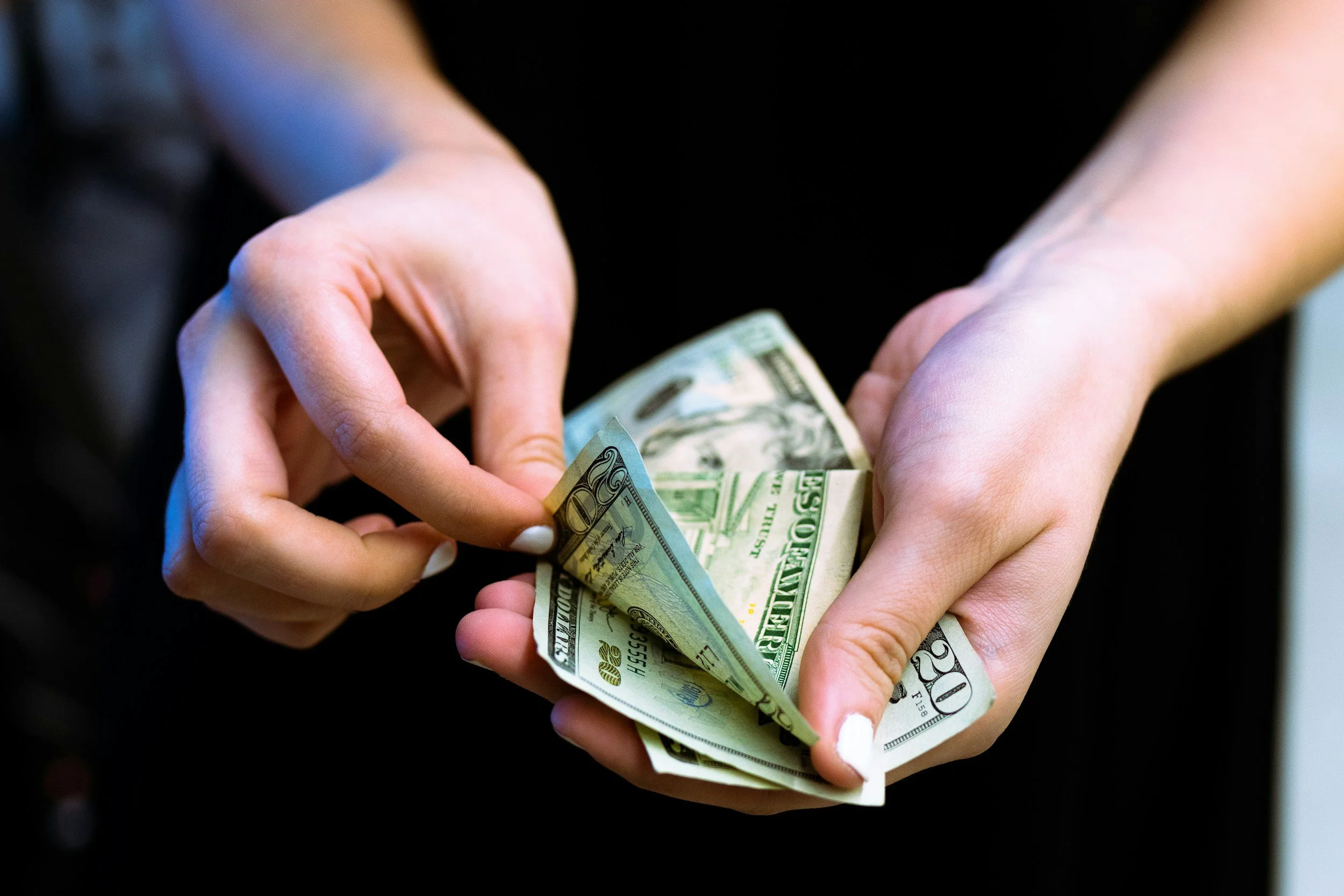
It depends on how you want to train—group classes, private training, or having someone train your dog for you. It depends on what problems your dog has or what you want them to learn. And it depends on how much work you're willing to do.
But there's another factor that matters just as much: the trainer.
Dog training is not a regulated profession. There is no license you have to hold or standardized education you have to complete before calling yourself a dog trainer. That means there is an enormous range in skill, experience, education, and price.
So before you choose the cheapest option, it's worth understanding what you're actually paying for.
What Does Dog Training Cost in Spokane?
In general, you'll find three broad options:
Group classes: Around $100–$200 depending on the trainer, length, and format.
Private training: About $150–$350 per session.
Training done for you: Generally $3,000—$10,000.
As you can see, prices vary considerably between trainers and programs.
Group Dog Training Classes: The Cheapest Option
If price is your primary concern, group classes are generally the least expensive way to get your dog into training but have the lowest rate of return. In my opinion they are not worth it. Yes the cost is low, but you likely won't learn anything useful. Most of my clients started with classes, and after wasting hundreds to thousands of dollars with no results, they come to me.
I especially don't recommend them for behavior problems, and completing a series of group obedience classes doesn’t mean you have a trained dog in the real-world sense.
The local dog-training clubs are volunteer-run. The people teaching those classes are not professional dog trainers, aren’t paying to further their education, and for them this is simply a hobby.
It's also important to understand what you're actually learning. A class can teach you how to get a mediocre sit, down, or walk through an exercise in a controlled class environment. That's not the same thing as teaching your dog to come when called around distractions, calmly hold a down while another dog walks by, walk nicely on a leash, or respond when something exciting happens.
I've seen this distinction play out with my own clients.
One woman came to me after taking all of the classes at a local training club with her multiple dogs. She was proud that her dogs had all earned their Canine Good Citizen certifications, but they still pulled on leash, had no recall, couldn't be off leash, were reactive to dogs and people, and were attacking each other.
Another client had spent about $500 at a local force-free training facility taking classes. Her dog could briefly sit and down, but only when lured with food, and he couldn’t hold the positions. He listened only when he felt like it, pulled on leash, couldn't recall around distractions, and was extremely leash reactive.
These owners had tried. They’d put money and time into training. They simply didn’t get the outcome they needed.
And that's an important distinction when you're comparing prices - outcome.
Private Dog Training: What Does It Cost?
Private training is usually the middle ground between group classes and having someone else train your dog.
In Spokane, $150–$350 per session is the range to expect from a professional dog trainer, although you'll find options outside that range.
Private training gives you something a group class can't: the trainer's full attention.
Instead of working through a standardized curriculum with a room full of dogs, your trainer can create a plan around your dog, your goals, your environment, and your particular problems.
You can also train where the problem actually occurs versus a training facility.
For meaningful training goals or behavior problems, you may need anywhere from 5-10+sessions.
And this is where comparing trainers by their hourly rate can get misleading. A $200 session isn't necessarily more expensive than a $100 session. If the $200 trainer solves the problem in 5 sessions, you've spent $1,000 and have the dog of your dreams.
If you spend $100 on 20 sessions and you still haven’t fully resolved the problem, you've spent $2,000 and still don’t have the dog you wanted.
The cost per session isn't the same thing as the cost of getting your problem solved.
Having Your Dog Trained for You
The third option is having the trainer do most of the training for you.
This can mean a board-and-train program, where your dog stays with the trainer, or a program like my Trained For You program, where I do the training for you in your home and community.
This is generally the most expensive option. Expect programs to start around $3,000, with more intensive programs costing considerably more.
The advantage is that you're paying someone else to do the hard part, you’ll get results much faster, and you’ll get guaranteed results.
Why Are Some Dog Trainers So Much More Expensive Than Others?
This is probably the most important part of the answer.
Dog trainers are not equal. They do not have the same level of skill or ability to solve your problem.
We're all self-taught to some degree because there is no standardized licensing or required education for the profession. But that doesn't mean every trainer has made the same effort to become good at what they do.
I have spent roughly $15,000 in the last year alone on continuing education. I've traveled across the country to work with other trainers. I've spent thousands of hours learning. I continually invest money back into my education and skillset because being good matters to me.
I'm not going to work for peanuts.
And you shouldn’t expect a trainer who has invested that much into becoming excellent to charge the same amount as someone who teaches a few basic obedience exercises (at a mediocre level) as a hobby.
You're not paying a professional trainer for the hour you're physically standing next to them; you're paying for everything that went into making them capable of helping you. You're paying for their experience and education. You're paying for their ability to look at your dog's behavior and figure out what's actually going on. You're paying for their ability to create an effective plan instead of handing you a generic list of exercises.
And you're paying for a lot of work you never see.
When I work with a client, there are phone calls before we ever meet. I'm thinking through their case, developing a game plan, planning individual sessions, finding appropriate helpers and helper dogs, driving to and from training, and writing follow-up emailed summaries. I’m answering their texts and emails between sessions.
I offer free group hikes for my clients so they can continue practicing and improving after their individual sessions.
None of that shows up as an "hour of training,” it's part of what you're paying for.
Don't Choose a Dog Trainer Based Only on Price
When money is tight, it's completely understandable to look for the least expensive option, but with dog training, cheap can get expensive very quickly if it doesn't work.
I've had clients come to me after spending hundreds or thousands of dollars on previous training.
One had completed an entire series of group classes. Another had spent around $500 at a training facility.
Neither came to me because they wanted to spend more money.
They came because they still had the same problems.
That's why I think the better question isn't:
"How much does this trainer charge?"
It's:
"What am I likely to get for what I'm spending?"
A $75 class isn't a bargain if you spend hundreds of dollars on classes and your dog still doesn’t listen.
A $50 private session isn't necessarily a bargain if you need 20 of them, and a $300 session isn't necessarily expensive if the trainer can accomplish in 5 sessions what another trainer couldn't accomplish in 20.
You get what you pay for—but what you pay for is the trainer's skill and the result, not just the hour on the clock.
And yes, there is absolutely such a thing as Temu dog training: someone who taught their own dog to sit when lured with a treat and decided they're ready to charge people for training. They watched a few Youtube videos and think they’re an expert.
Don't pay someone just because they're cheap. They need to know what they're doing.
What If You Can't Afford $2,000 for Dog Training?
You don't need $2,000 to train your dog well.
My largest private-training package is $1,250. You can also work one session at a time for $200, if that's what fits your budget. You don't have to buy more training just because you're not finished yet.
One of the biggest factors in your results is what you do between sessions. The harder you work, the more invested you are, and the more you communicate with me between sessions, the more you're going to get out of your paid training. None of that costs extra. If you actually do the work between sessions, you're making the most of the money you've already spent. You're not paying me to watch you practice the same thing over and over.
I also don't believe in dragging training out for years just to keep a client paying for sessions.
My focus is on results.
It doesn't take years to fix reactivity. The goal is to teach you and your dog what you need to know, make meaningful changes, and get you back to living your life together… as quickly as possible.
Don't Forget the Cost of Equipment
Training itself isn't necessarily your only expense.
Depending on your dog and what you're working on, you may also need training equipment.
My clients may use training toys ($10-$40), specific leashes ($20-$55), e-collars ($250), prong collars ($30+), or other equipment depending on the dog and the training goals.
Different training approaches also come with different equipment costs. Some methods rely heavily on food rewards, which can mean going through a significant amount of treats.
Ask your trainer what equipment you'll need before you start so you know the actual cost of the program—not just the advertised session price.
So, How Much Should You Budget for Dog Training in Spokane?
If you just want the numbers:
Group classes: Often under $100–$200+ depending on the provider and format.
Private training: Approximately $150–$350 per session is a reasonable range for professional private training in Spokane.
Training done for you: Generally $2,000+, with intensive board-and-train programs potentially costing $8,000+.
My private training: $200 for a single session, $700 for 4 sessions, or $1,250 for 8 sessions.
But don't stop at the price.
Ask what the trainer's education looks like. Ask how much experience they have with the problem you're dealing with. Ask what results they've gotten with dogs like yours. Ask what happens between sessions. Ask how long they expect training to take.
Most importantly, ask yourself what you actually want from your dog.
If you just want your puppy to learn sit and down, a few sessions may be enough.
If you want to stop your dog from lunging at other dogs, develop a reliable recall, walk comfortably on leash, or safely enjoy off-leash adventures together, you're looking for something very different.
The cheapest dog training isn't always the most affordable.
And a well-trained dog who can go places with you, enjoy more freedom, and actually be a pleasure to live with is worth a lot more than the price of a training session.