
Don't choose a trainer based solely on reviews (these are often paid for), the number of credentials/professional memberships, the cost, or how many obedience commands they can teach. Look at their dogs, their philosophy, their methods, and what they actually accomplish in the real world.
LOOK AT THE TRAINER’S DOGS
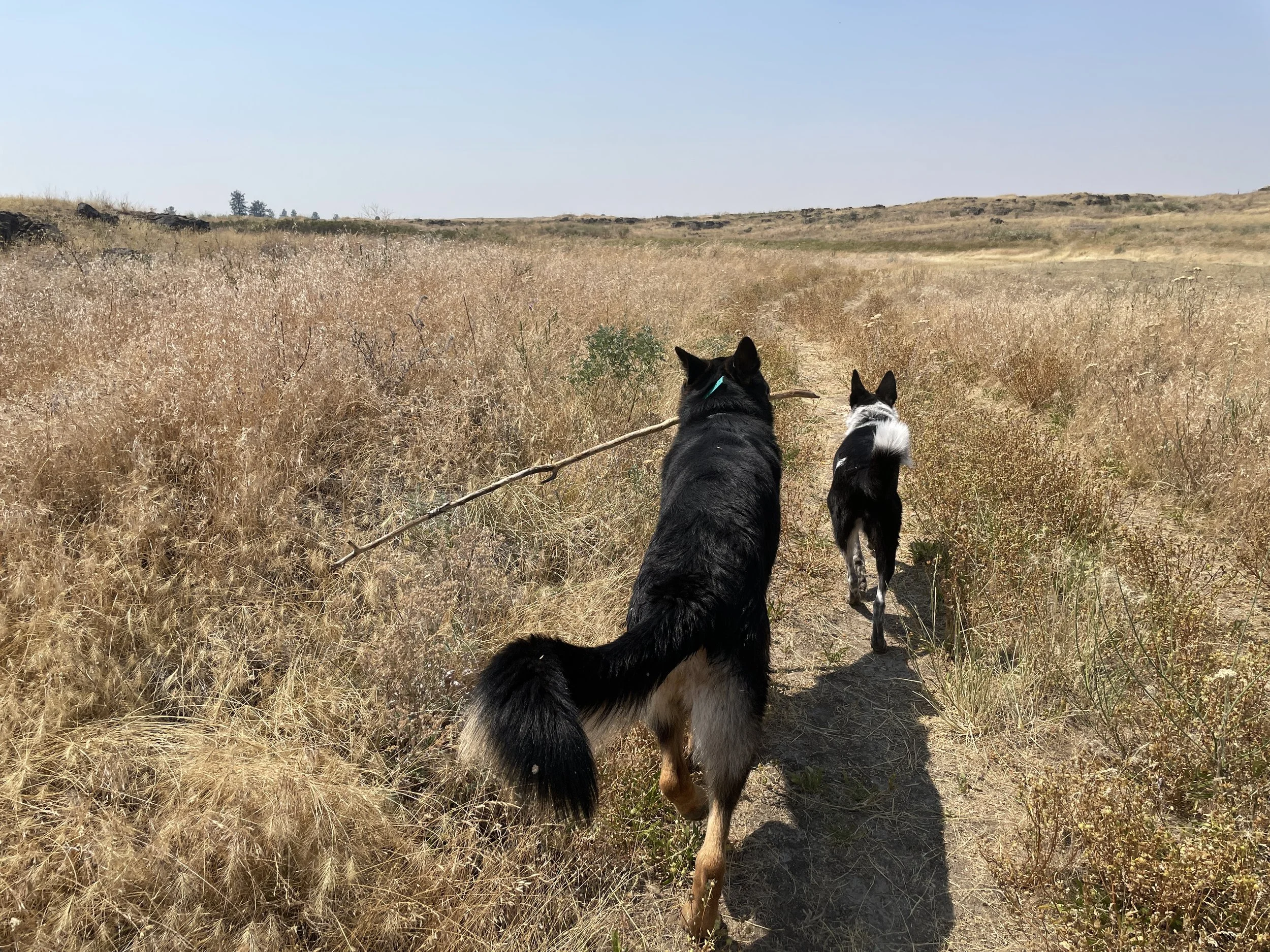
I don’t want rigid obedience. I want dogs who can be happy and free but still listen when needed (without food).
Do you want what they have?
I know far too many trainers that can’t even let their own dogs off leash. I wouldn’t want that. I love having my dogs off leash, so I’d want a trainer that knows how to teach that. If that trainer can’t leave the house without a pound of treats and a no-pull harness, that’s not a good fit for me because I don’t want those things. Many trainers can’t handle their dog’s aggression or reactivity and rely on medication and management. This isn’t acceptable. If a trainer can’t even train their own dogs, they certainly can’t train yours.
Can the trainer let their dogs off leash in public or do they make excuses? Can their dogs hike off leash? Can they recall them off a deer, another dog, a person on a bike? Can they meet and interact appropriately with new dogs and people… off leash? If not, this is a big red flag.
Does the trainer brag about having their dogs on behavior medications or calming supplements? Is that what you want? Or do you want the problem fixed without chemical suppression?
Do they micromanage their dogs? Constantly having them on place, tethered, leashed, or behind gates? Does the dog have to walk in heel everywhere it goes?
Do their dogs look happy and reasonably well-behaved? Do you like how they live with their dogs? Personally, I can’t stand micromanagement. I train so my dogs make good choices on their own. They have free roam of the house and yard (I have a dog door), and most of our walks are off leash with them running around.
TRAINING METHODS
Management vs Training
Management is simply preventing the dog from doing something whereas training teaches them what to do or what not to do. For example: your dog is jumping up on people. Management would be not letting them approach people and keeping them leashed or having them sit while people pet them. Training would be teaching the dog that jumping isn’t allowed so that they can freely interact with people without jumping. Or addressing dog reactivity by avoiding other dogs or distracting with food. The goal should be that the dog has freedom and still makes the right choice or does as they’re asked.

Trainers who recommend supplements and medication should be avoided.
When a trainer says something like, “Reactivity can’t be fixed, only managed,” or “some breeds will just always be that way,” that’s not true. That’s simply a trainer who doesn’t know how to train reactive dogs. Reactivity can always be resolved.
Medication and Supplements
Good trainers aren’t recommending chemical suppression for dogs. They train them. Trainers who recommend behavioral meds or calming supplements are a huge red flag.
Punishment and Rewards
How do they stop bad behavior? How do they reward good behavior?
Unwanted behavior can only be stopped with punishment, so if a trainer tells you punishment isn’t necessary for training… they don’t understand learning theory, and they’re going to just manage the problem instead of fixing it. Most trainers do not know how to effectively and fairly use punishment.
Rewards should be much more than just a treat. Using only food is one-dimensional, transactional, and boring. I prefer to reward dogs with play, affection, or freedom.
E-Collars
A tool everyone has an opinion about, the e-collar is a great training tool that can be easily used unfairly and poorly. Red flags for e-collar use:
not using it at all
using it for everything
e-collar conditioning - something trainers purport is kinder, but essentially means they’re applying stim before giving a command to “get the dog used to it”. Essentially, this is unfair because the dog can never avoid the e-collar stim, but it also habituates them to the e-collar, so generally higher levels need to be used in the end.
bragging about only using low levels - low levels are fine for some dogs, but for a lot of dogs low levels will do nothing. It shows a lack of understanding of proper e-collar use, negative reinforcement, and punishment.
WHAT’S THEIR END GOAL?
And what’s yours? If your goal is to resolve reactivity and introduce your dog to new dogs, you need to make sure the trainer can do this or wants to do that. If a trainer is saying dogs don’t need friends and you should just distract them with food every time they see a dog, that’s not going to help you achieve your goal. Likewise, if a trainer is telling you to use the e-collar if they even glance at another dog, that also won’t help you reach your goals.
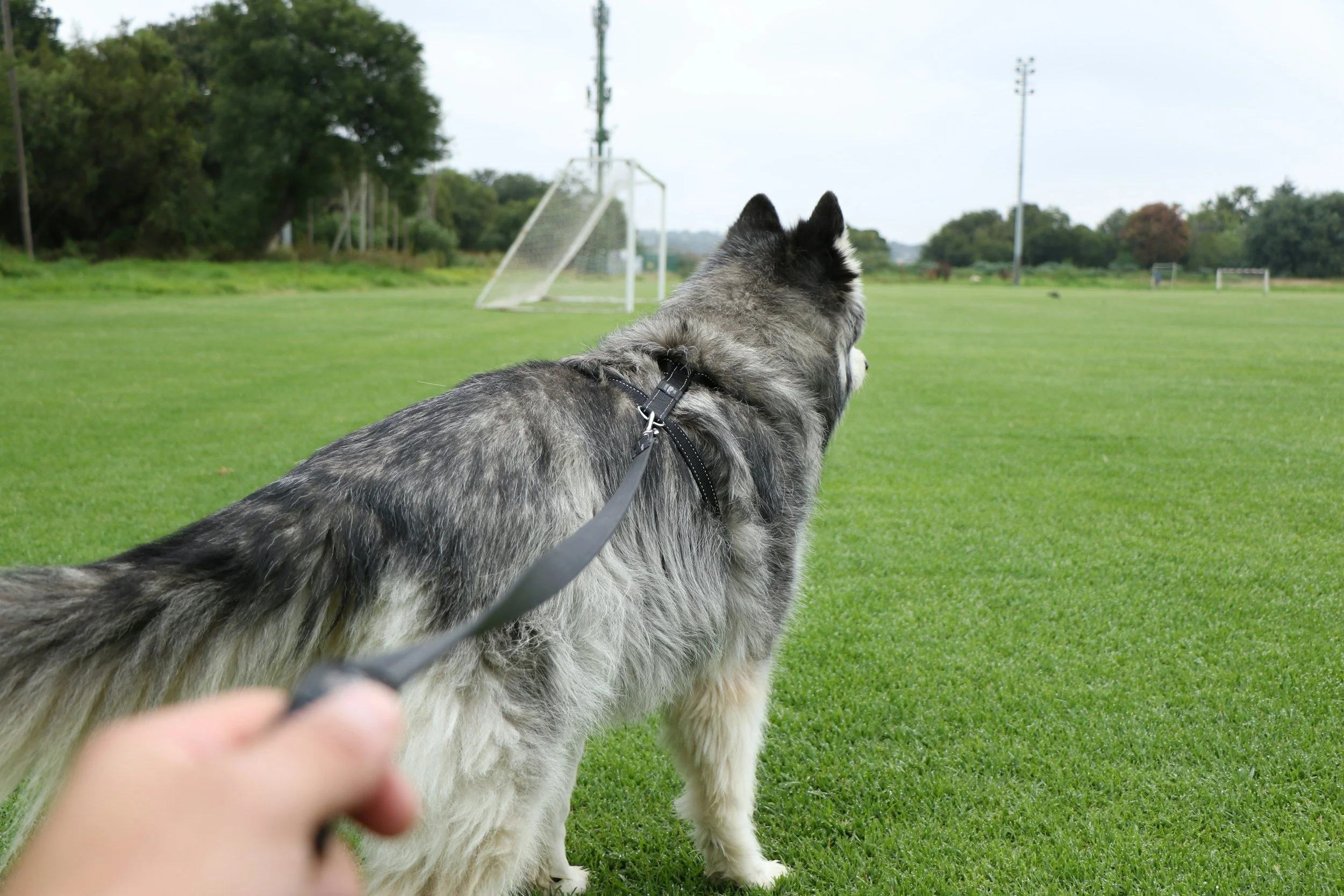
For many trainers, this is the goal for reactivity: “calmly” watching at a huge distance instead of being able to play with other dogs off leash.
Some trainers will be going for robotic obedience where every mistake ends in a leash pop or e-collar tap. They expect perfection. A precision heel on every walk. No looking at other dogs. No off-leash play. No rewards. They’re okay with a dog who is shut down, so long as they obey.
Does the trainer want you to carry treats on you forever? Are they okay with your dog only listening when you have food available?
A well-trained dog should be able to function happily and freely in the real world, not just in a training session with a pocketful of treats or their e-collar on.
My goal? A happy dog with a bigger, more fulfilled life. I want your dog to get time off leash, time with dog friends, time to explore nature, and have fun with you! The purpose of training is to give you and your dog a better life. Training that creates shut down dogs is not good. Training that lets the dog decide when to listen is also bad.
CREDENTIALS
Don't be impressed by credentials or professional memberships. A credential should mean that someone has demonstrated knowledge and skill. Most of these don't. Membership in a professional organization means even less.
Credentials: What did they have to do to earn it? Take an online multiple choice test? Did they have to demonstrate training skill and ability? Who created the credential and what makes them qualified to determine competence in others? A force-free trainer who can’t even train her own dogs creating an online course and credential is a joke (but all too common).
Professional Membership: These simply require an annual fee to join and use their logo. Many will allow people who aren’t even dog trainers to join.
Training skill: This is what actually matters. Can they actually produce the results they claim? In my experience, the more a trainer pays for external validation, the less skill they have.

All it takes is money to join APDT, even if you don’t train dogs.
Popular memberships and credentials that, in my opinion, are meaningless include:
CPDT (Certified Professional Dog Trainer)
APDT (Association for Professional Dog Training)
PPG (Pet Professional Guild)
IACP (International Association of Canine Professionals)
IAABC (International Association of Animal Behavior)
Master Dog Trainer
KPA (Karen Pryor Academy)
VS Academy (Victoria Stilwell Academy)
Fear Free
Animal Behavior College
Any behaviorist credential
The only credential I’ve found that makes students prove in-depth knowledge and training ability is TWC® (Training Without Conflict). The creator is Ivan Balabanov, a two-time world champion in bite sports, and a trainer who has saved dogs no other trainer could help.
MY PHILOSOPHY
Dogs deserve freedom. They should get to be off leash and run free. They should be able to have friends or tolerate other dogs and people. Good training holds up in the real world around distractions, without needing food bribes. E-collars are a great tool but needn’t be used constantly. Shutdown dogs are never the goal. Training should make your and your dog’s lives better. Management isn’t training. Reactivity is fixable.