
What Dog Training Methods Actually Work?
If you start looking for a dog trainer, you’ll quickly run into labels like positive-only, force-free, balanced, and everything in between.
Most owners assume the next step is figuring out which one is “right” or “best”.
That’s not the most important question. The real question is this: What is the real-life outcome?
Not the outcome in your quiet living room. Not in a controlled setup when everything is easy.
In real life. In a busy park, a narrow hiking trail, when your dog is off leash, etc… then what happens?
At the end of training, does the dog actually have more freedom? Are they relaxed and confident off leash? Can they handle the real world without constant management? Is their behavior actually better? Or are they still dependent on avoidance, food distractions and rewards, structure, or constant handler control?
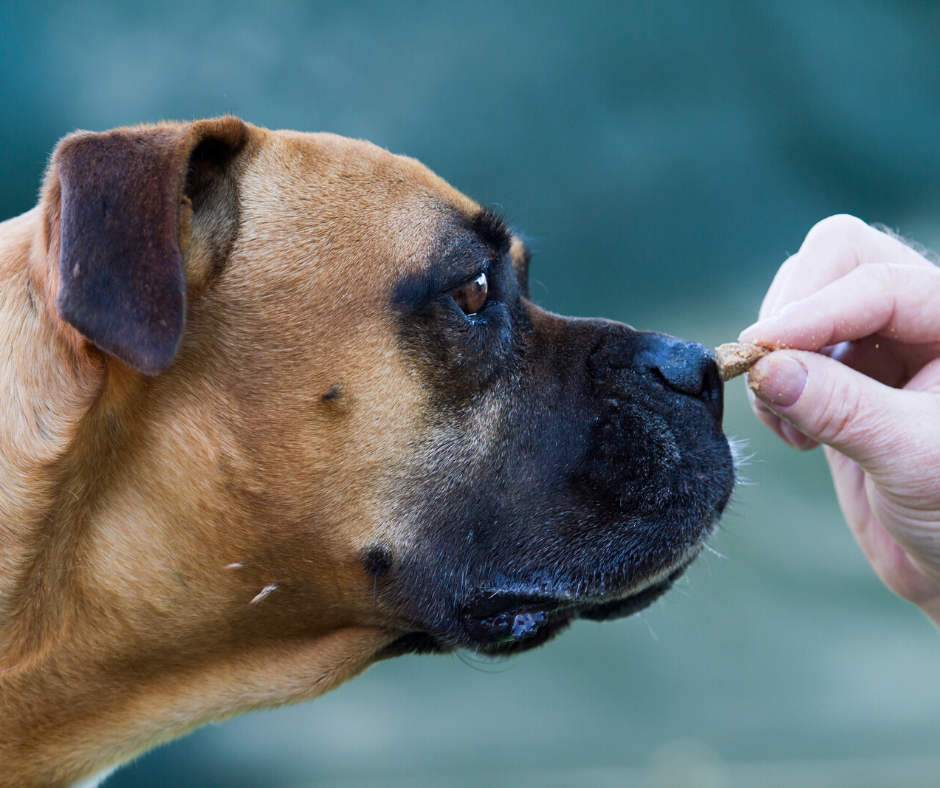
That outcome matters more than any label.
Labels Matter Less Than Results
When people ask what kind of trainer I am, I usually say “balanced” because it’s the closest label for what I do.
It means I will punish behavior we don’t want and reinforce behavior we do want. It means training with clarity and fairness so the dog fully and easily understands the rules and expectations. It means a dog who is motivated and full of life.
Sometimes that involves food or play. Sometimes it involves leash corrections. Sometimes it involves tools like an e-collar.
But the label itself is not the point.
Good training should always account for the dog’s emotional state, clarity, and long-term quality of life. The end result should not be a shut-down or stressed dog who must wear an e-collar 24/7. Nor should it be a dog who must live life on leash, isolated from other dogs, on trazodone or prozac for “anxiety,” who constantly has food shoved in their face. It should be a dog that is stable, confident, and able to live freely and joyfully in the real world.
I Used to Believe Treats Could Solve Everything
I started my career as a positive-only trainer. I trained that way for far too long.
I believed that if you were creative enough, consistent enough, and generous enough with food, you could solve almost anything without needing anything else.
At the time, I also believed I would never use tools like a prong collar or e-collar.
That changed with my own dogs, Olive and Oak, who gave me a completely different perspective on dog training.
Olive Changed My Perspective
Olive is a border collie/heeler mix with extremely high chase drive.
If something moved—squirrel, bird, bike, trash blowing in the wind, even a leaf—she was after it.
She had a strong recall in most situations. She was highly food and toy motivated, but none of that mattered once her chase drive kicked in.
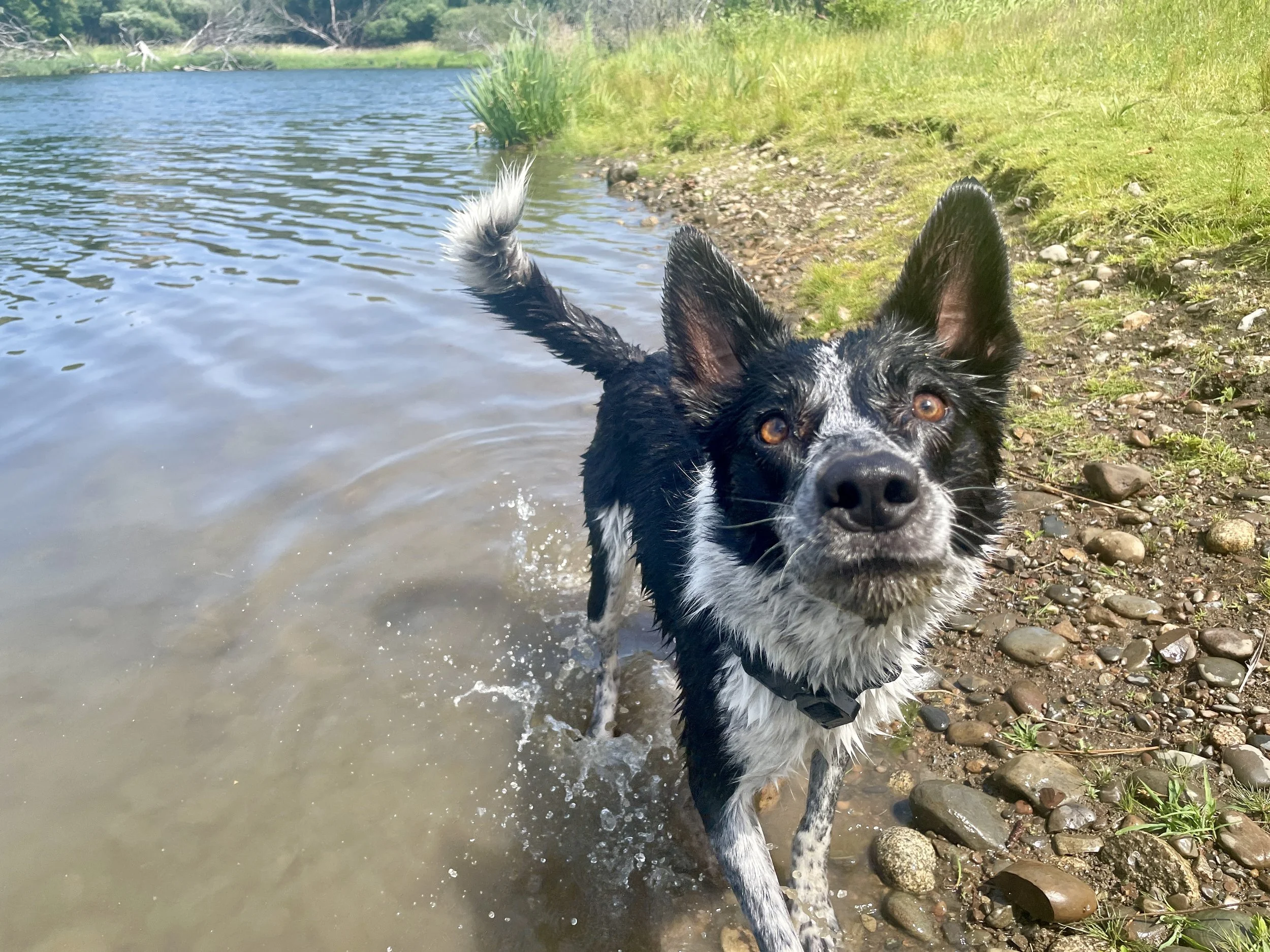
Olive living her best off-leash life thanks to her e-collar.
The thrill of the chase, deeply embedded in her DNA, was far, far better than the treat in my pocket. There was no comparison. She would choose the chase every single time without hesitation, and this was especially concerning when she wanted to chase bikes.
Keeping her on a leash for life wasn’t an acceptable option. She is a smart, curious, energetic dog who would never be happy with a life of confinement. She was bred to work and to run.
So I made a difficult (at the time) decision: I learned about negative reinforcement and punishment and bought an e-collar to proof a recall that would hold up even when her instincts kicked in hard.
She experienced a few fair corrections early on for ignoring recall cues. Once she understood the expectation, her decision to come or not come was much easier. Ignoring “come” had a penalty now; it wasn’t just a fun free-for-all where she could ignore me and come back when she felt like it for a treat. Suddenly the chase wasn’t as fun. She wasn’t stressed or shut down or scared. She simply understood the rule: you have to come when I call.
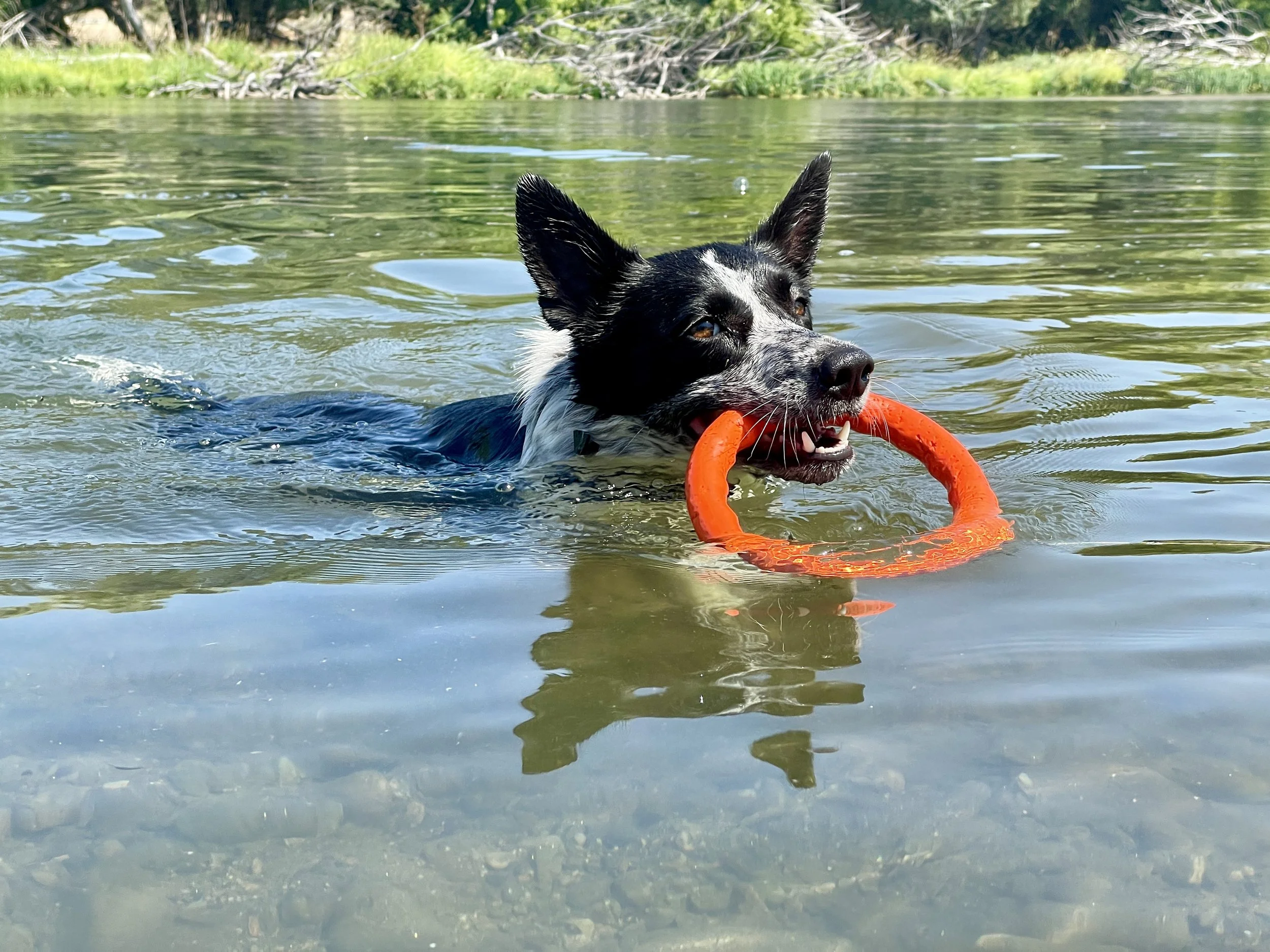
Now she can hike off leash, explore, swim, and recall away from wildlife and bikes. In fact, the other day I recalled her off a running deer that she was seconds away from catching — and I didn’t need the e-collar because she so fully understood the rule and wanted to avoid a consequence. That level of recall wasn’t achieved by managing her more carefully or using better food rewards, it was achieved by making the expectation clear.
Oak Changed My Perspective Too
Oak came to me reactive toward other dogs at just 10 weeks old.
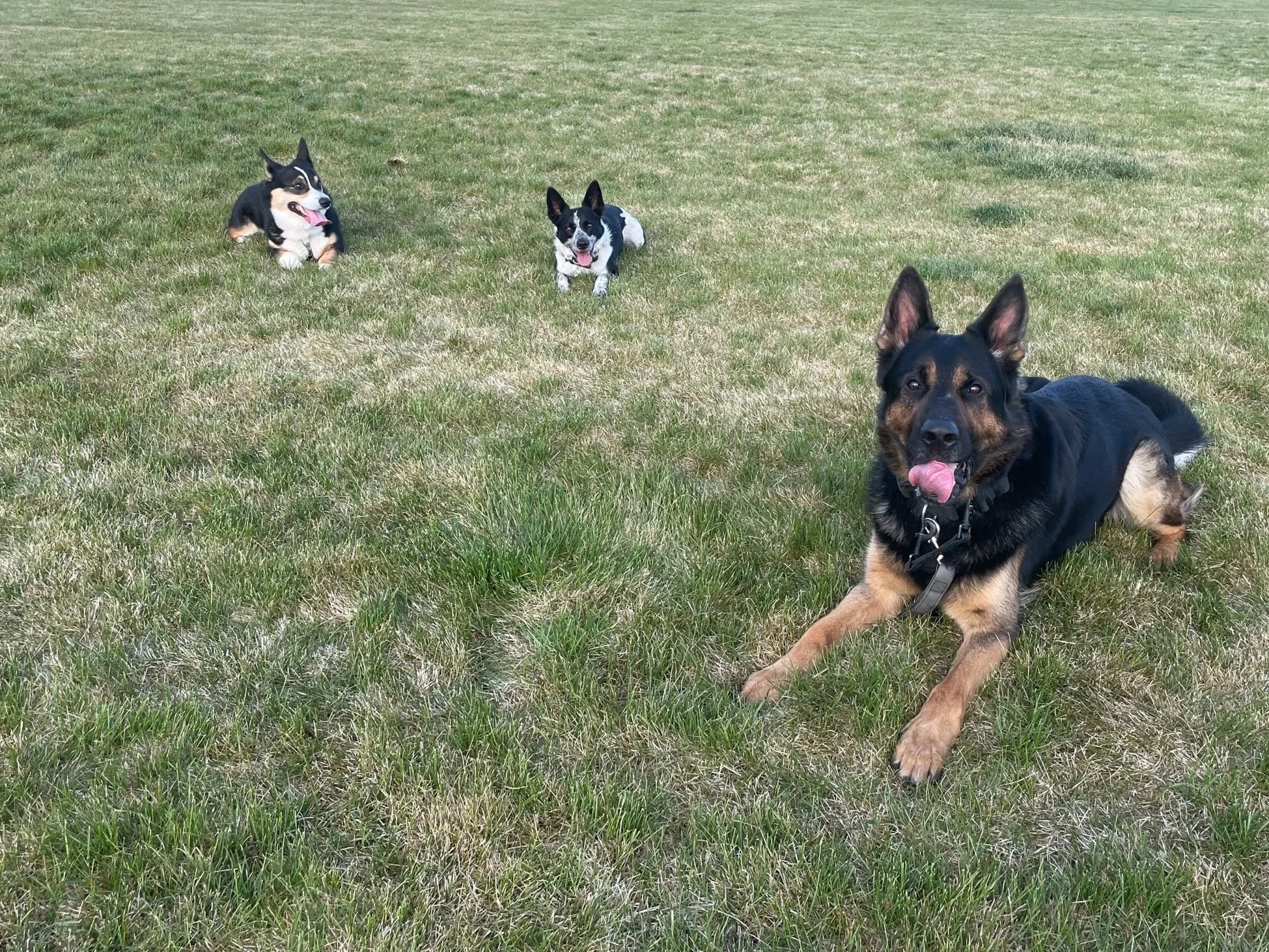
Oak, fully rehabbed and enjoying dog friends.
For over a year, I worked through the methods I originally believed in—counterconditioning, reinforcement of alternative behaviors, distance management, and keeping him under threshold.
Progress was minimal. The behavior simply wasn’t changing in any meaningful way.
What ultimately changed things was addressing the behavior directly in a way that made it clear that barking and lunging was not an acceptable option. His reactivity was simply punished in a way that made sense to him.
Once he finally understood that behavior was not allowed anymore, the reactivity stopped, and for the first time, he was able to actually greet and play with other dogs.
He didn’t just become “manageable.” He became free to participate in normal dog life—playing, interacting, and existing without constant restriction or management. He is so incredibly happy getting to run and play with dog friends.
What Actually Matters When Evaluating Training
A lot of training looks good in controlled environments but doesn’t hold up in real life. So don’t judge training by how it looks in one single session. Sure the dog may seem happy — but only because it’s just sitting in the living room being fed for an hour. Overall it’s stressed and unfulfilled. Or maybe the dog looks stressed because of a punishment event, but a few days later the dog is running down trails off leash for the first time in their life.
I judge it by outcomes:
Is the dog relaxed and happy overall?
Does the dog actually have more freedom?
Do behaviors hold up outside of training setups?
Is the owner confident without constant management?
Does the dog get to participate in real life, or are they being prevented from it?
A dog doesn’t need to be happy in every moment of training. They just need to end up happy and with a better life than they started with.
What Lure-Based Obedience Often Misses
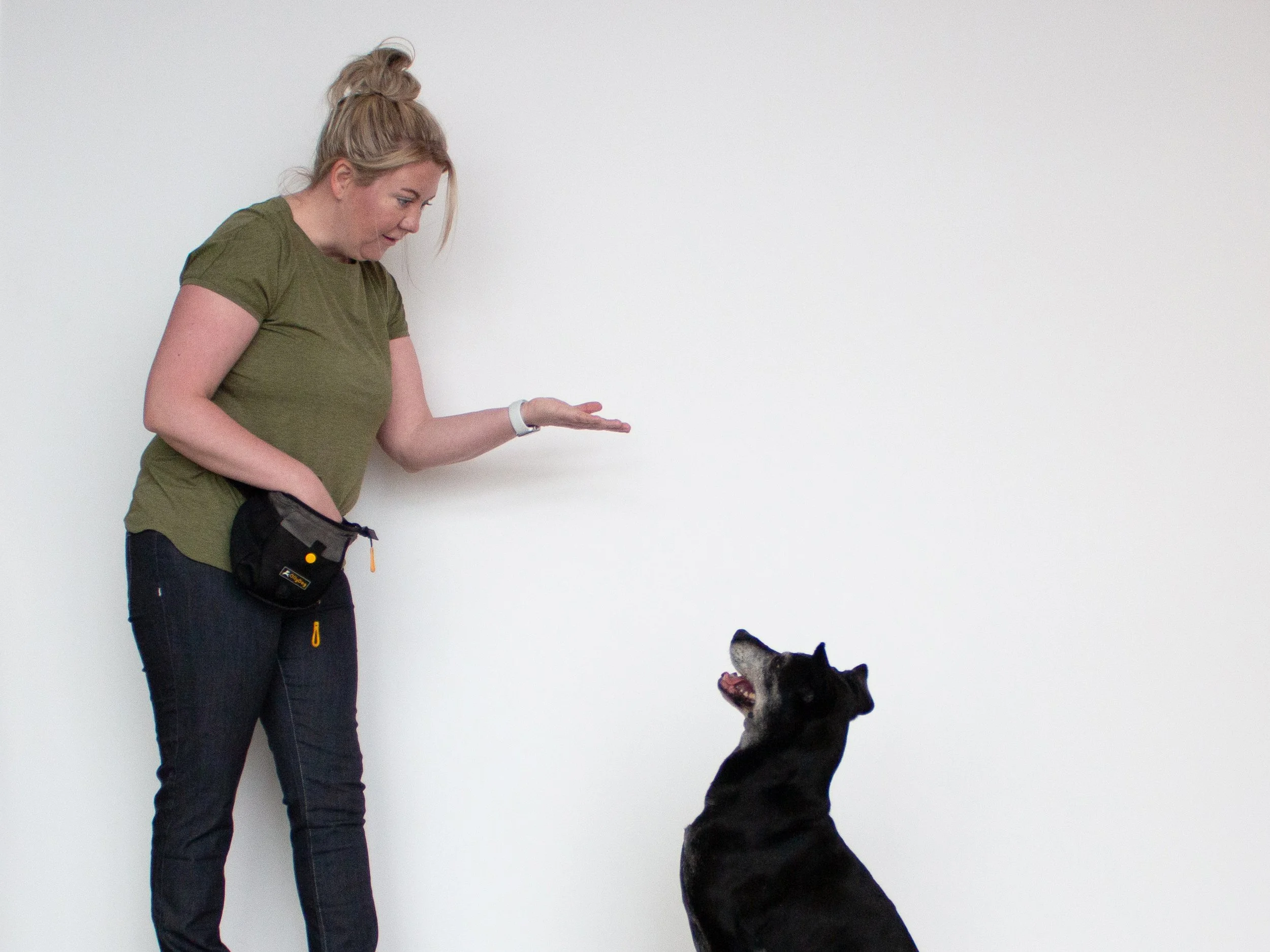
One of the most common problems I see is obedience built almost entirely through luring with food. The dog is lured into a sit. Lured into a down. The dog constantly has food shoved in their face.
So what the dog actually learns is: “IF I do this, I’ll get food.”
Instead of learning “I HAVE to do this.”
That creates obedience that works in a quiet living room but falls apart when real-world competing motivators show up. Not because the dog is confused, but because the behavior was never built to override competing interests. They’ve been taught they can opt out of doing the behavior that was asked without penalty.
What Real Obedience Actually Means
The real gap in training isn’t what a dog can do under ideal, laboratory-like conditions.
It’s what a dog will do when conditions aren’t ideal.
When they’re excited. When they’re distracted. When they’re off leash and see a squirrel or another dog. When something more interesting is happening. When no food is present. When the handler isn’t actively shaping every moment.
That’s the difference between obedience that looks good in a highly controlled training session and behavior that actually holds up in real life.
What Actually Works
Good training isn’t about avoiding every mistake or managing every behavior out of existence or constantly “helping the dog get it right”.
Good training is about building clarity for the dog and creating real-world reliability with the goal being a happy dog that can live a normal life and an owner that’s not constantly stressing about their dog.
And truthfully? That’s good balanced training.
Judge Training by the Life It Creates
If you’re trying to decide whether a training method works, don’t start with the label. Look at the outcomes.
Is that training method getting dogs off leash or keeping them restricted?
Are those methods resolving problems or simply showing you ways to manage or live with them?
Do the trainer’s dogs look happy and well-behaved?
Does the dog become more stable in real environments?
Does life get easier and better for both dog and owner?
Or does everything still depend on management, avoidance, or constant control?
Because at the end of the day, the best training method isn’t the one that looks the cleanest in a session or sounds the “nicest”. It’s the one that gives the dog the best life at the end. I know plenty of force-free trainers who can’t let their dogs off leash because they have no recall, or heavily medicated dogs, who can’t leave the house without pounds of dog treats in their pockets. I also know plenty of balanced trainers whose dogs only listen when wearing e-collars and who just seem perpetually stressed and afraid.
Do You Want Help?
I work with Spokane-area dog owners who want real results. Owners who want to do more with their dog. Owners who have worked with other trainers and got nowhere.
Private Training, In-Home Training, and Homeschool available.