
Are prong collars safe and humane? Or cruel and unethical?
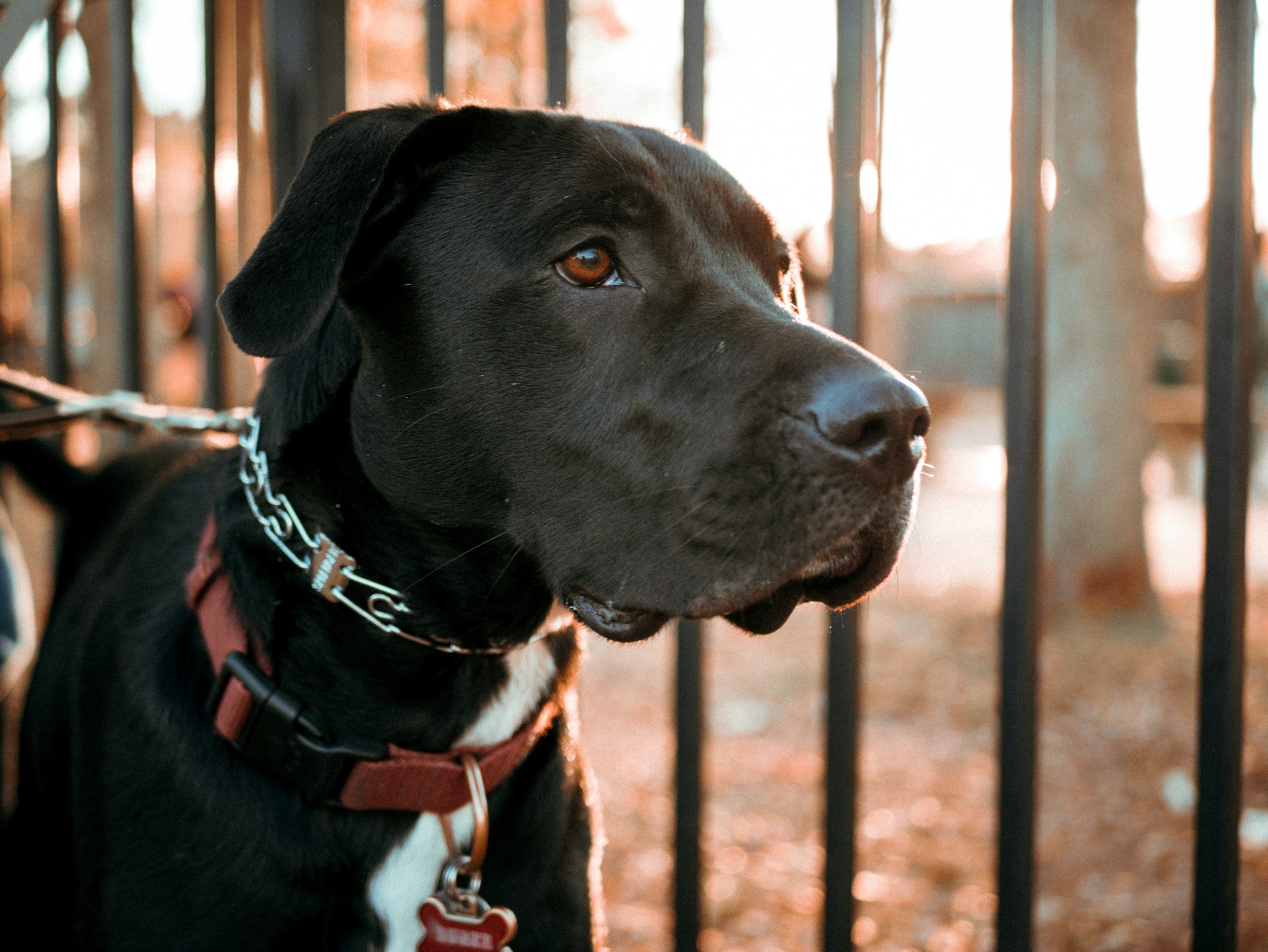
If you've ever considered using a prong collar, you've probably heard some pretty strong opinions.
"They're cruel."
"They hurt dogs."
"They're abusive."
As a dog trainer, I've heard all of those comments. I've also heard them from clients who were desperate for help but terrified of making the wrong decision for their dog. And I understand the concern.
Prong collars have an unfortunate name, and they look pretty intimidating. If they had been marketed with a friendlier name (like Gentle Leaders), I suspect far fewer people would question them. Ironically, I find Gentle Leader head halters far more aversive for dogs than a prong collar - they just have a better marketing team!
My own opinion was formed by years of working hands-on with dogs, and what I've seen is the exact opposite of what many people expect.
My Experience Changed My Mind
The first thing that changed my perspective was using a prong collar on my own dogs.
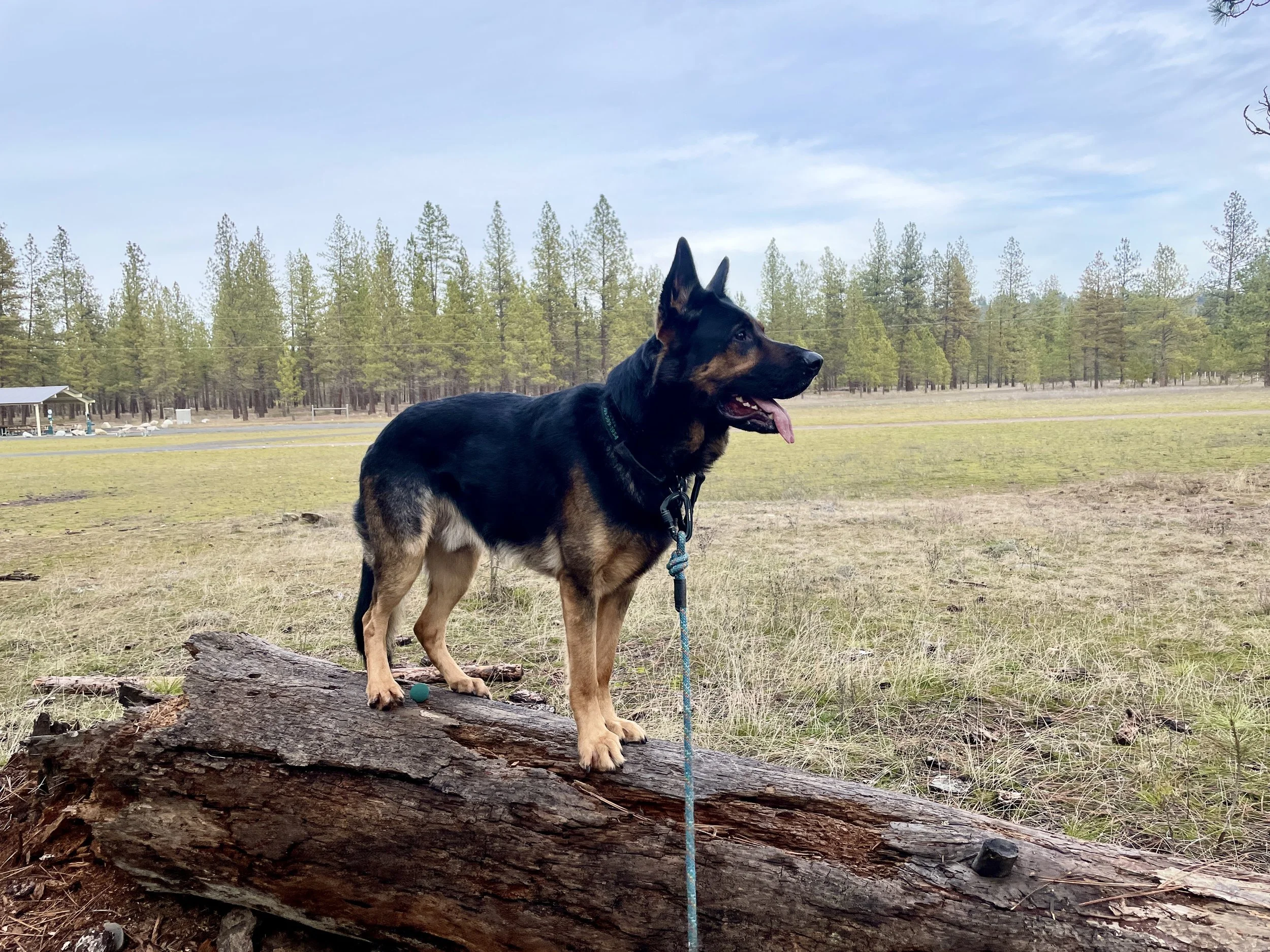
Oak is a big, strong German Shepherd who used to lunge very hard at other dogs. I needed to know I could safely hang on to him when he went crazy barking and lunging at other dogs. Even with weeks of counterconditioning, he still hated his Halti. A front-clip harness did absolutely nothing except mess up his gait.
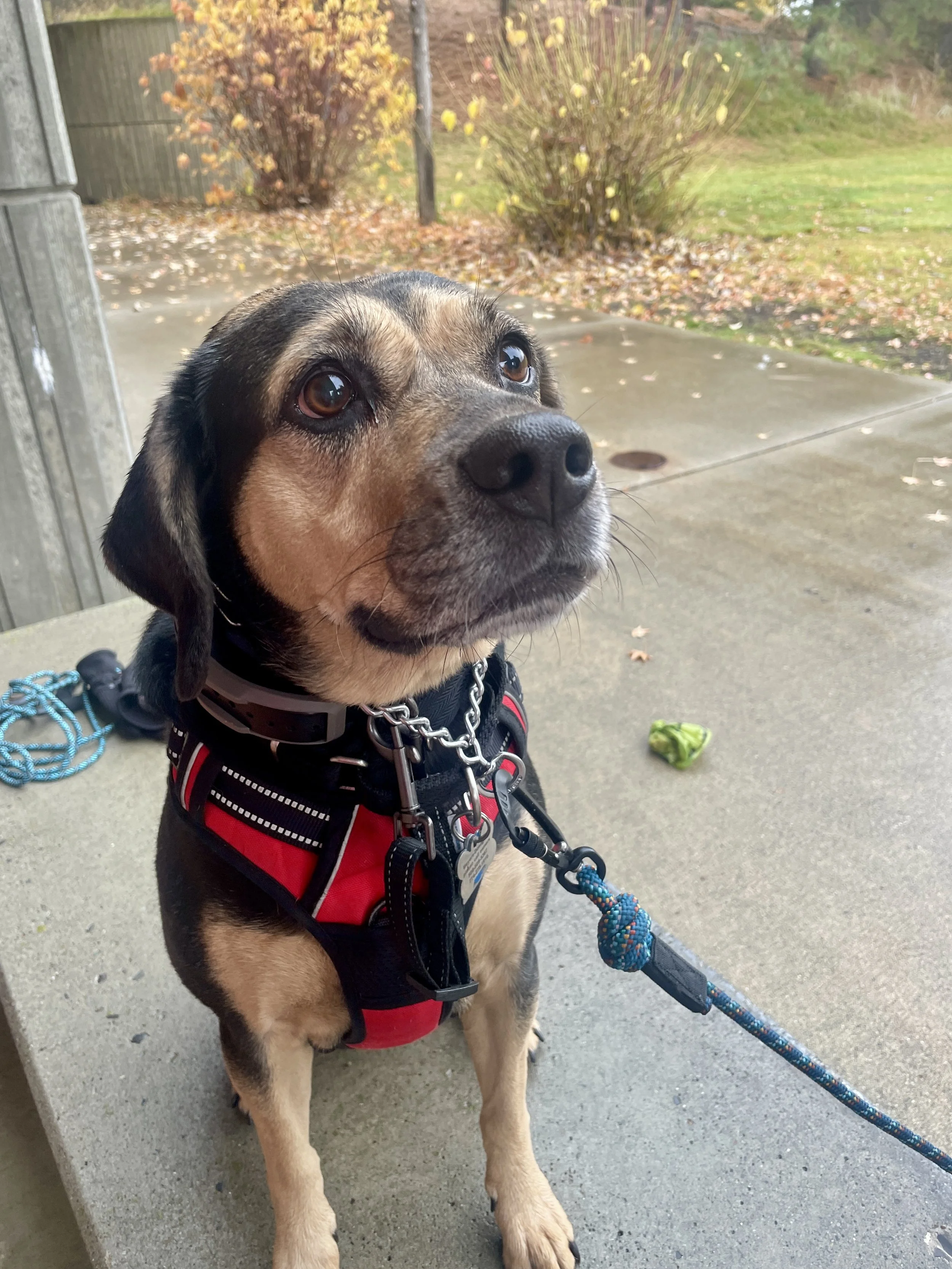
Olive, my border collie mix, used to completely lose her mind when she saw squirrels. She would lunge, scream, and work herself into an absolute frenzy. The harder she pulled, the more frustrated she became, and the more frustrated she became, the harder she pulled. It was a vicious cycle, but a prong collar interrupted that cycle almost immediately. Instead of spiraling into hysteria, she calmed down immediately and could actually enjoy the walk.
She wasn't shut down. She wasn't traumatized. She was her usual happy self, just no longer stuck in that frenzied loop of lunging and screaming.
Since then, I've recommended prong collars to countless clients. I've watched them help dog after dog, and I have never seen a prong collar traumatize a dog, hurt a dog, make a dog worse, or any of the other things you might imagine will happen.
Why Dogs Become Calmer
One of the biggest misconceptions is that dogs, especially anxious or aggressive dogs, will be made worse by aversive tools like a prong collar. But that’s not what I see. I see dogs become calmer, more confident, and better behaved because the feedback is finally clear.
Many dogs spend months—or even years—being allowed to pull on walks. They lean into a flat collar or harness, drag their owner around, hit the end of the leash over and over, and nobody has ever clearly communicated, "Don't pull."
The pulling itself creates frustration and arousal with nowhere to go, which often leads to even more pulling and sometimes vocalizing, leash biting, or other frustration-related behaviors.
A prong collar gives immediate, consistent feedback the moment the dog makes that choice to slam into the end of the leash.
Don't pull.
Dogs are physical learners. They communicate physically with each other every day. They don't sit down and talk things through. Clear physical communication makes sense to them. They snap at each other, bite each other, snarl at each other. Even very, very young puppies are physically corrected by mom for rude behavior.
Once that feedback is clear, many dogs simply relax upon understanding the rule - don’t pull.
The Dogs That Stick With Me
One dog I'll never forget was an adolescent German Shepherd named Mia. She was one of the most out-of-control dogs I've ever worked with.
She pulled so hard her owner could barely hold onto the leash. Even when we stopped walking to talk, Mia stood there pulling as hard as she could, screaming and barking in frustration.
I recommended two changes on the spot:
A Flexi leash to give her more freedom.
A prong collar to provide clear feedback about pulling.
The difference was immediate.
For the first time that session, she stopped lunging. She stopped screaming. She was relieved because the rules finally made sense to her. The expectation was clear and fair.
Another memorable case was a reactive dog whose owners had worked exclusively with force-free methods for years. He barked at dogs. Ignored anything his owners asked him to do. He was out of control and ran the house.
They were nervous about trying a prong collar, but they trusted me enough to give it a chance, and the improvement was immediate. His reactivity became less intense, he was far more responsive to his owners, and he stopped acting like he was in charge of every situation. He was still confident and happy, he just listened better and was easier to live with.
The owners called it an amazing tool and said they wished they’d tried it sooner.
Doesn't a Prong Collar Hurt?
It can.
A prong collar isn't meant to feel pleasant when pressure is applied. If a dog pulls hard into it, it can absolutely be uncomfortable or even painful for that moment.
The important part is that the sensation is both immediate and temporary.
The instant the dog stops pulling, the pressure disappears. The discomfort doesn't linger, and it doesn't leave the dog walking around in pain afterward. That's why the communication is so clear. The dog quickly learns that pulling creates pressure and relaxing the leash makes it go away. It’s negative reinforcement with perfect precision.
A prong collar distributes pressure very differently than a flat collar. Instead of compressing the entire front of the neck and trachea, the a prong collar only applies pressure at select points - the trachea is not being crushed and breathing is not restricted.
Ironically, that's one reason prong collars are a safer option for dogs that pull hard. Rather than allowing a dog to choke itself for an hour while putting continuous pressure on its throat, a prong collar gives brief, clear feedback that teaches the dog to stop pulling altogether.
Whenever I introduce clients to a prong collar, I encourage them to hold it. Feel the rounded prongs. Press it into their hand or even their neck. Most people are surprised by how different it feels from what they imagined.
What About Flat Collars and Harnesses?
This is where I think people often get things backwards.

Restrictive front-clip harnesses do far more harm to a dog’s body than a prong collar.
People are perfectly comfortable watching a dog spend an hour choking itself on a flat collar.
Or dragging its owner around in a poorly fitted harness while throwing all of its body weight into its shoulders and chest.
But the prong collar is the thing they're worried about.
To me, that's looking at appearances instead of welfare. It’s putting human emotions and false beliefs ahead of the dog’s wellbeing.
Repeatedly slamming into the end of a leash isn't good for a dog's body.
Living in a constant state of frustration and high arousal with no outlet isn't good for a dog's mind.
Harnesses aren't kinder simply because they avoid the neck. The force is just transferred into the dog's shoulders and chest. Restrictive harnesses contribute to shoulder issues in dogs that pull constantly. Front-clip harnesses alter the dog’s natural gait, and it’s neither kind nor healthy for a dog to walk with an abnormal gait for every walk of its life.
A prong collar removes that constant pressure because the dog learns not to pull so hard, and it doesn’t impact the dog’s gait or shoulder range of motion. It can be used for training, whereas harnesses simply cannot be.
Can Prong Collars Be Misused?
Absolutely. Just like any training tool.
Some people are far heavier-handed than necessary, and I don't support that. But ironically, I actually see the opposite more often.
Many owners are so afraid of hurting their dog that they're incredibly tentative with the collar. Their corrections are often too soft to be effective communication.
Like any tool, proper instruction matters. I also recommend buying a quality collar. A well-made Herm Sprenger collar is very different from the cheap knockoffs you'll find in big-box stores.
Fit and sizing are important. Using a safety clip matters.
Despite what you'll often hear, I don't like fitting them extremely tight and high on the neck. I prefer them slightly looser. The collar shouldn't constantly be digging into the dog's neck. Since it's a martingale design, it naturally tightens when pressure is applied and relaxes again afterward.
A Prong Collar Isn't Magic
A prong collar isn't a substitute for training, but rather, it’s a very useful tool in your toolbox.
Some sensitive dogs will naturally stop pulling once they understand the new feedback, and if you only wanted it for pulling on leash, that may be all you need. But if you take the prong collar off, the dog will still pull. That’s management. And sometimes that’s okay.
Other dogs will happily continue pulling through discomfort, though the pulling is usually less intense, so having a prong collar on isn’t enough to fully stop pulling altogether, and training with the prong collar is needed.
That's why I use prong collars as training tools, not just management tools. As a training tool, it can be helpful for many things, not just pulling on leash.
The collar improves communication, but the training is what teaches the behavior - not the tool itself.
What I Tell Nervous Owners
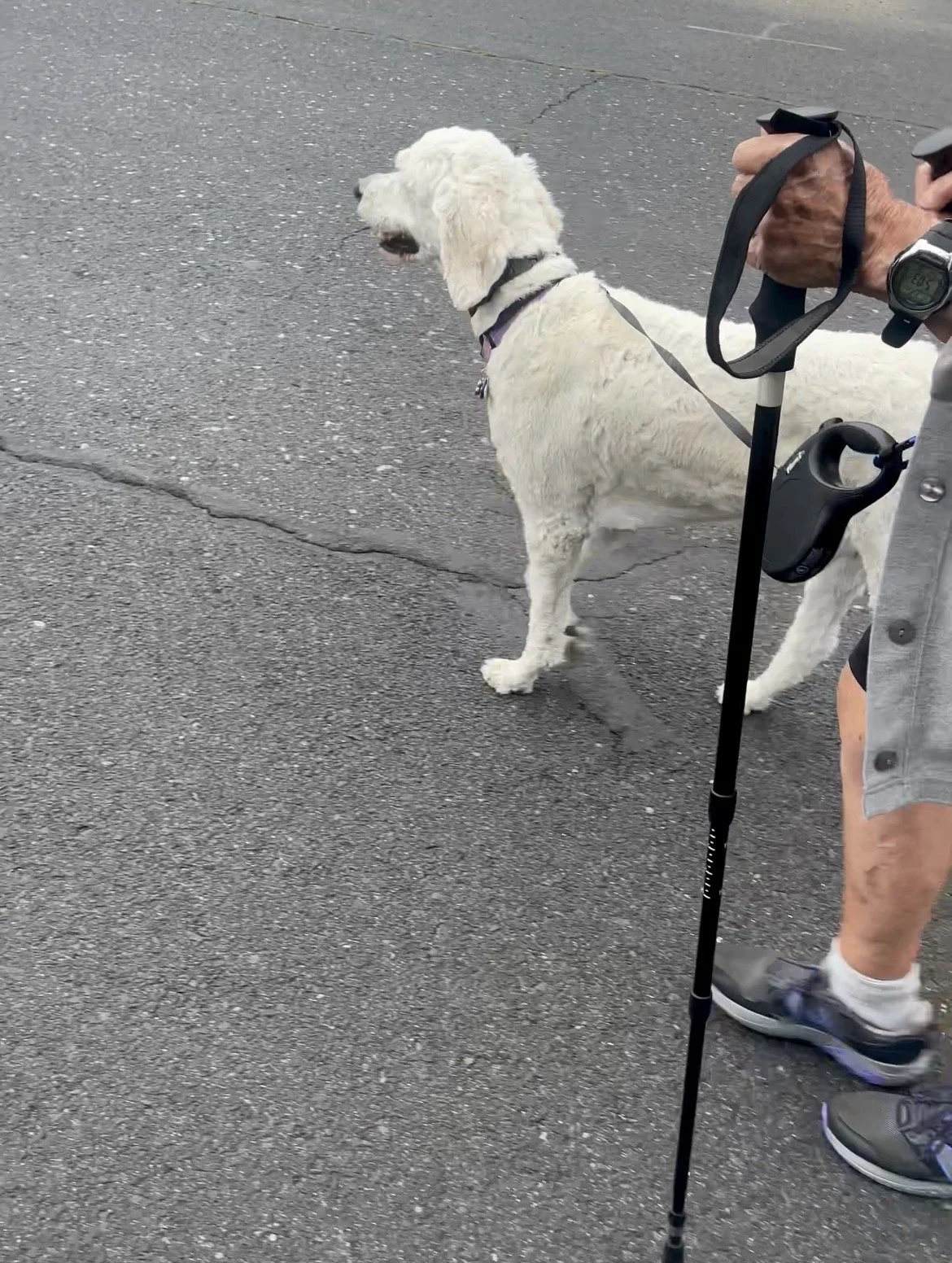
Brook wore a prong collar because her elderly owners could not safely walk her, even on a head collar or no-pull harness.
When someone tells me they're worried about hurting their dog, I don't try to pressure them.
I usually say something like this:
"Right now, your dog is spending every walk frustrated, pulling against the leash over and over and putting constant pressure on their own body. That's affecting them too—both mentally and physically."
"Let's put a prong collar on and take your dog for a short walk. If you hate it, we'll take it right back off."
I've never had someone try a prong collar and want to go back to a harness or flat collar.
Suddenly walks are easier, the dog is calmer, and everything just feels so much better.
My Bottom Line
Don't let the appearance of a training tool make the decision for you.
Look at the dog in front of you and ask yourself whether your dog is happier spending every walk pulling, choking, lunging, and becoming increasingly frustrated, or whether clear communication might actually be kinder.
In my experience, dogs don't care what the collar looks like. Only people do. And dogs will always prefer a prong collar over a head collar or restrictive harness. They also prefer clear rules.
If You’re In Spokane…
and want real training help, I offer Private Training, In-Home Training, and Homeschool to fix your dog’s behavior problems!