
When I bring up e-collars to clients, I often hear something like:
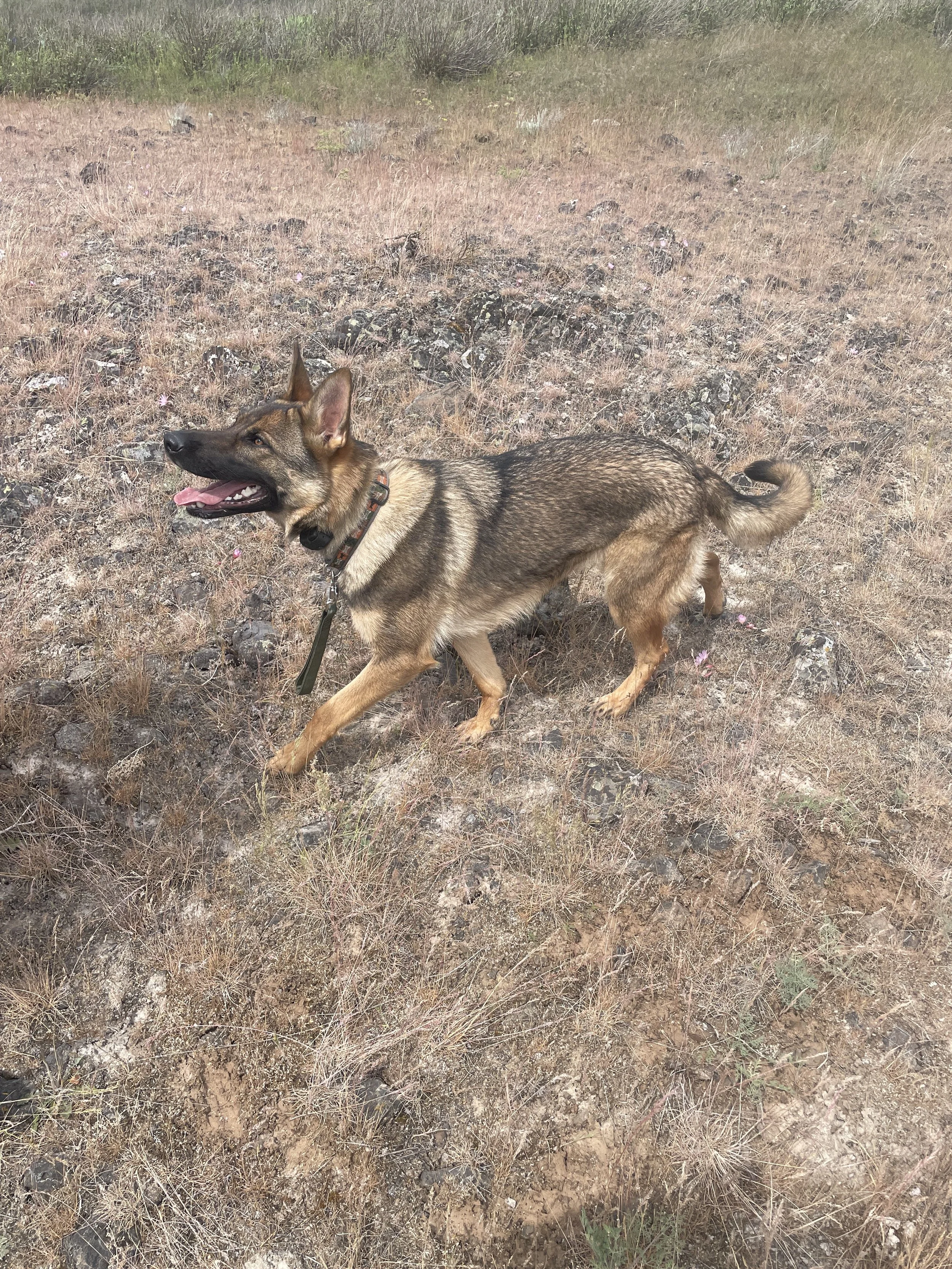
She got to run off leash for the first time in her life thanks to an e-collar.
“Does it shock? Won’t that hurt my dog?”
“I could never hurt my dog.”
“Aren’t they really mean?”
And I get it. I used to think the same way. I thought e-collars were abusive, unnecessary tools of torture that would only make behavior problems worse and couldn’t possibly help dogs. In my mind, there was always a better, kinder option. If a dog needed something aversive to behave, I assumed the training had already gone wrong.
Then I got Olive and Oak and suddenly my beliefs were seriously challenged.
What changed my mind
Olive, my border collie/heeler, has serious chase drive. Bicycles, wildlife, blowing leaves, anything moving—she HAD to go after it - fully committed, no hesitation. She would not come back until she’d caught it. Yeah, she had a great recall when there was nothing else going on. Most dogs do. But that’s not good enough. I couldn't let her off leash because God help us if a bicycle or kid on a scooter went by.
At a certain point, I had to make a decision - either she lives on leash forever, or I find a way to teach her that coming back when called is non-negotiable, even when there’s something fun to chase.
I chose the second option, and that’s the reason she’s off leash now. Not occasionally, not “only in safe areas,” but off leash in real environments where most dogs like her simply can’t be trusted.
She runs. She explores. She swims. She lives like a dog. She ignores bikes. She can recall off a running deer.
Yes, I use an e-collar. Yes, she has been shocked. And I don’t regret that choice for a second. Neither does she because without it, she wouldn’t be truly happy. She wouldn’t get to swim in the river or race down trails.
That experience didn’t just change how I train. It changed how I think about freedom itself.
E-collars aren’t about being mean. They’re about access to life

This is real freedom for a formerly reactive dog. Totally fixed with the help of an e-collar, and now he can enjoy life.
Most people think the conversation about e-collars is about whether we should or shouldn’t “correct” dogs, whether we should or shouldn’t use tools.
That’s not the real issue, though. The real issue is what the dog gets access to.
Without a reliable recall or impulse control, many dogs lose the ability to safely experience the world off leash. Their life becomes a series of restrictions:
Always on leash (if they get out at all)
Always managed, avoiding other dogs, avoiding bikes, squirrels, all the hard things
Always prevented from making mistakes instead of learning from them in real time
Prevented from meeting new dogs and new people
For most dogs, especially active dogs, that’s a very small life that leads to boredom, frustration, reactivity, isolation. And that’s why so many people are stuck with reactive dogs or are googling things like “natural supplements to calm my hyper dog.”
An e-collar, when used correctly, is what allows me to safely expand that world for dogs so they can truly enjoy life.
Reactivity steals freedom too
This is the part people often miss. Freedom isn’t just off-leash hiking. A reactive or aggressive dog loses access to everyday life.
Walks disappear or only happen at 4 am.
Encounters with other dogs or new people are avoided.
Hikes become stressful or impossible - narrow trails and dogs and people? No way.
I’ve worked with dogs who hadn’t been on a walk in years because every attempt ended in barking, lunging, and lots of stress for the owner.
When used correctly and responsibly, an e-collar can be part of changing that picture. Not by suppressing anything or by shutting the dog down, but by clearly helping the dog understand that this behavior is no longer allowed.
The result is a normal dog who can participate in life again.
Dogs who couldn’t walk calmly down a street can now go for walks. They can even be off leash around things that used to set them off. Dogs who couldn’t be around other dogs can now happily play and run with them. That’s not a small change. That’s a dog being given their life back. You will never get there with food. Sometimes an e-collar is necessary to be kind to the dog.
Oak, my shepherd, was one of these dogs. Dog-reactive since puppyhood, I wasn’t comfortable letting him off leash lest a dog go by. He certainly never got to play with other dogs or get the same freedom Olive did.
Until I started using the e-collar.
Then his reactivity stopped. He could be off leash. He could run down trails with new dog friends. He had his life back. He was the dog I always knew he could be - but that would never have happened without the e-collar.
What e-collar training actually looks like
There’s a lot of misunderstanding about how these tools are used. Most people think you just put one on the dog, crank it up, and start shocking them for everything they do “wrong.” That couldn’t be further from the truth.
One of the first things I do with hesitant owners is hand them the remote and collar and let them feel it themselves.
I have them press the contact points into their hand and slowly increase the level until they can feel it. The collars I use go from 0-100. I can’t start to feel it until around 15.
Most people start nervous. Then they realize something important: the low levels we start with are barely noticeable. They’re not screaming in pain; often they don’t even feel it. That’s where training often begins with dogs on e-collars. At low levels until they understand.
The goal is not to shock the dog into compliance. The goal is to teach the dog:
what behavior produces the sensation so they know how to avoid it
how to turn it off
Once that understanding is there, then yes, we may increase the levels because now the dog understands how to avoid it. It’s their choice now.
The goal should be that once the dog understands it and wants to avoid it, you rarely need to use it but always have it available should you need it.
Yes, it can hurt
I don’t believe in pretending otherwise. It’s not always “just a tingle” or “just like a TENS unit.”
At higher levels, an e-collar can absolutely hurt. It can be uncomfortable, startling, and unpleasant. They are meant to be. In the same way getting a speeding ticket or going to jail is meant to be unpleasant.
And I don’t think that should be hidden or softened to make people feel better about it.
What matters is clarity - does the dog understand why it happened? Do they want to avoid it in the future and know how to avoid it?
A dog that understands exactly why a consequence is happening and how to avoid it is in a completely different emotional state than a dog being confused, overwhelmed, or shocked randomly.
That difference is everything.
In my experience, dogs recover extremely quickly when the communication is clear. They don’t carry emotional damage from a single moment the way humans often assume they will.
Dogs are tougher than people think
There’s also a tendency to underestimate how resilient dogs actually are. Dogs are not fragile or weak or stupid.
They run full speed through brush, crash into trees, wrestle each other, and keep going like nothing happened.
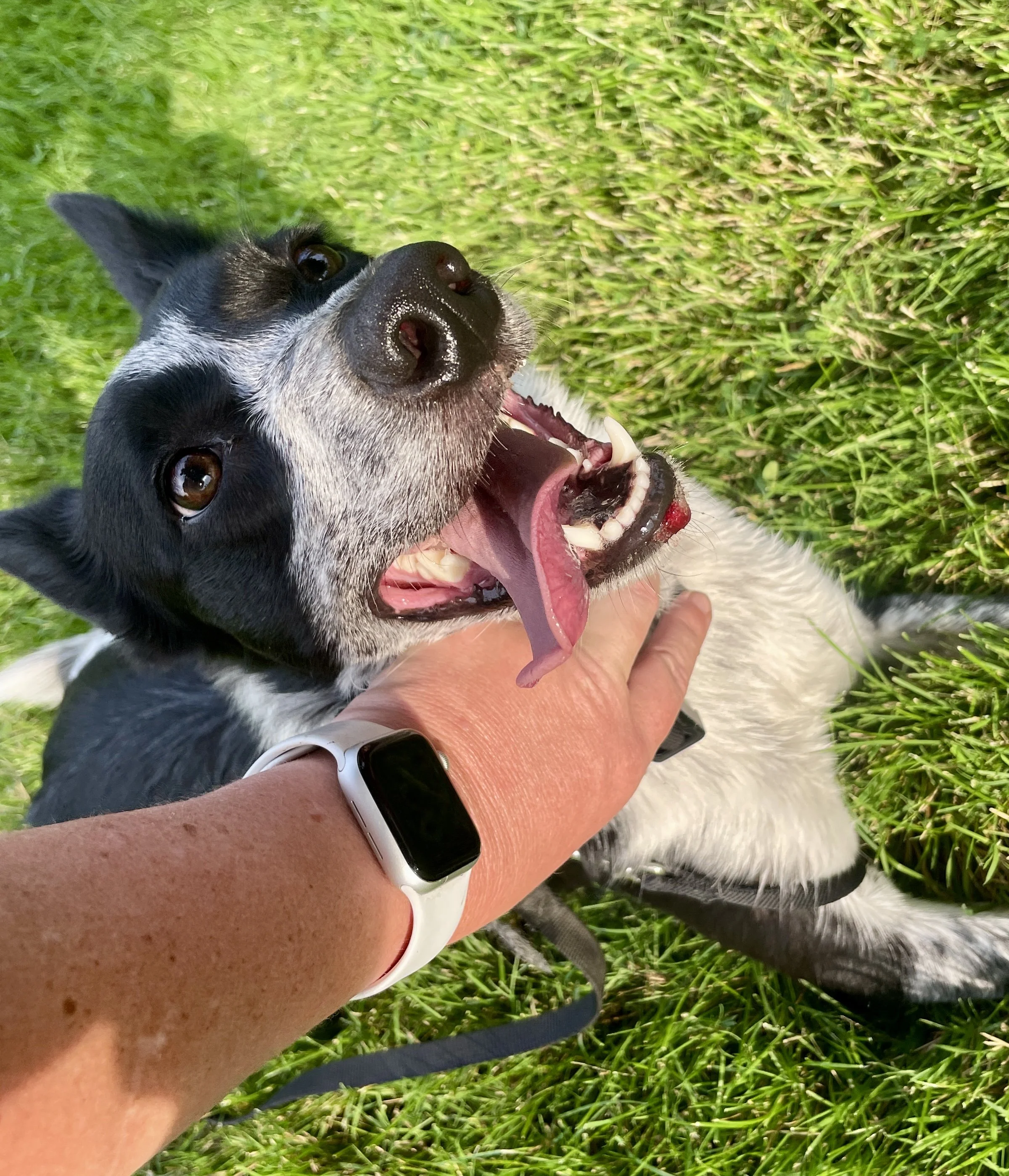
Olive’s bleeding face after her squirrel fight. Totally unbothered.
Olive once found a porcupine on a hike. She shoved her face into it, embedding quills into her skin. It had to have hurt, but she did it again. And again. And again. She came happily running back to me with 20 quills stuck in her face. The experience didn’t traumatize her or make her shut down. The pain did not bother her enough to stop shoving her own head into sharp quills.
Another time she chased a squirrel (ignoring an e-collar penalty). She caught it, and the squirrel bit through her lip and latched onto her face. She yelped and tried to shake it off. It clearly hurt. The squirrel got away—and she immediately chased it again, clearly unbothered by her punctured and bleeding face. She was not scared of the squirrel or shut down or traumatized by the pain of the squirrel bite.
That doesn’t mean dogs don’t feel pain. They do. It means pain doesn’t automatically override motivation, curiosity, or drive in the way people often assume it does.
Humans do the same thing: We get tattoos. We run marathons. We play contact sports. We do ice baths. We choose temporary discomfort because the experience or outcome is worth it.
Dogs are no different in principle, even if the details look different. We are not traumatized by temporary pain either. Olive would say the squirrel bite was worth it. She has definitely chased squirrels since. And both my dogs would say the e-collars are worth it because it means FREEDOM.
I don’t use e-collars for everything
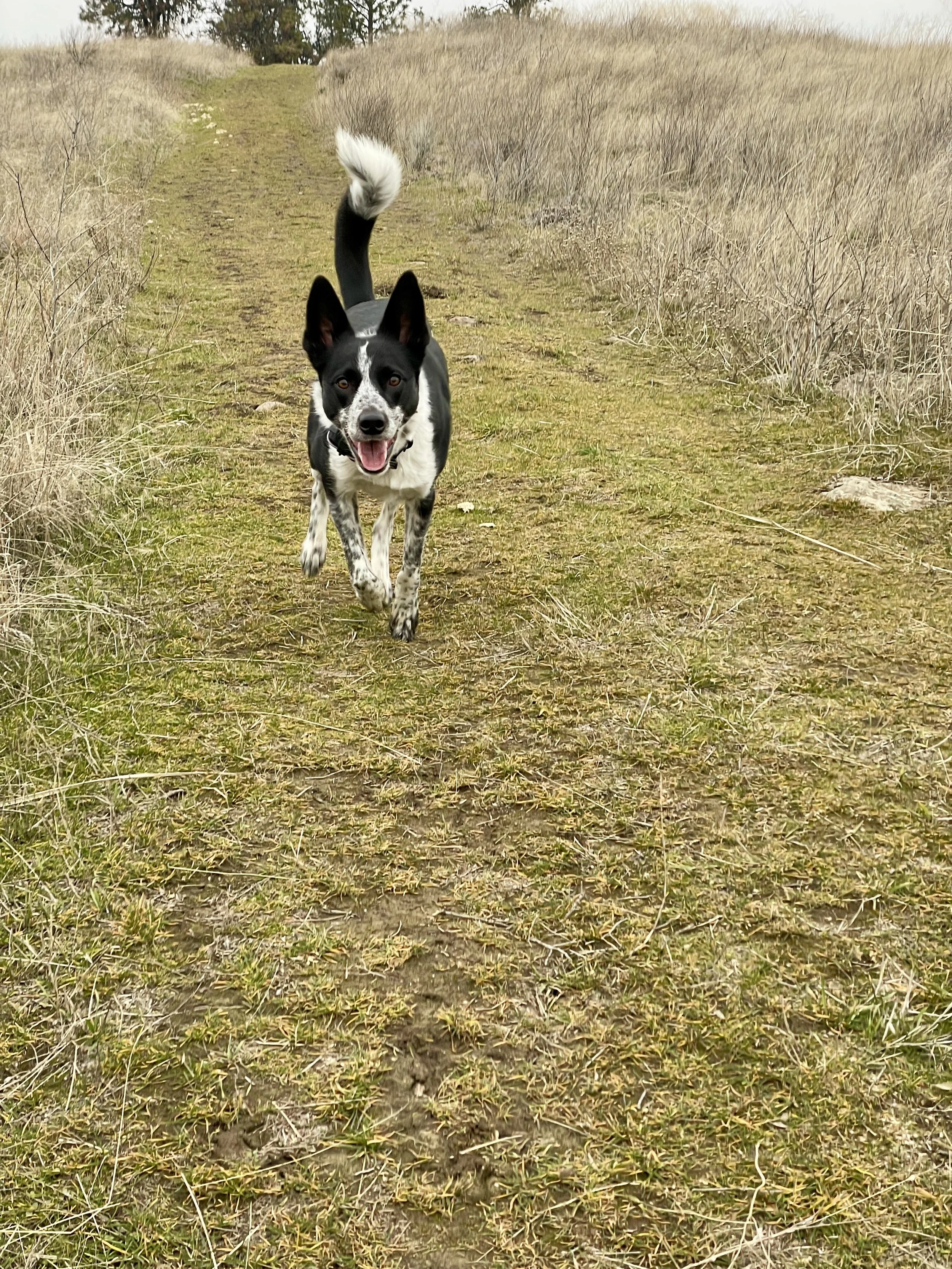
E-collars are not a universal tool for me.
I don’t use them for every behavior problem, and I don’t believe every dog needs one for every situation.
I primarily use them for two things:
Off-leash reliability in real environments
Reactivity and aggression cases where safety and clarity are critical
If a dog is already on leash and the situation allows for it, I’ll often use leash pressure instead. It’s simple, direct, and effective.
The tool has to fit the context. Not the other way around.
The biggest mistakes people make with e-collars
Most of the problems people associate with e-collars come from misuse, not the tool itself.
The most common issues I see are:
Using the collar for reinforcement before the dog understands the behavior
Repeated corrections with no clear path to success
Poor timing
Not clearly connecting behavior to consequence
Using it as a constant punishment tool instead of communication
Turning it into background pressure instead of a clear signal
In those cases, yes, you’ll see confusion, shutdown, or conflict. But that’s a training problem.
Fair use requires clarity. The dog has to understand what is being asked, what happens if they don’t respond, and how to avoid the consequence entirely.
Without that, nothing about training is fair—regardless of the tool being used.
Is it mean to use an e-collar?
No. Not when you use it correctly and fairly.
I’m not using it to hurt my dog. I’m using it to give my dog a better life.
If I had to choose between a life of restriction or a brief moment of discomfort in exchange for freedom, exploration, and safety, I know what I’m choosing every time.
That’s true for Olive and Oak, and it’s true for the dogs I work with.
The hardest truth in dog ownership is that kindness is not always about avoiding discomfort. Sometimes it’s about accepting a moment of it in service of a much better outcome. Every animal and every human wants freedom more than anything. I think it’s mean to not give them freedom because of feelings about a tool.
Do you really need an e-collar?
In my opinion, every dog should have one for off-leash recall because every dog deserves the ability to live a full life, which includes running off leash in nature.
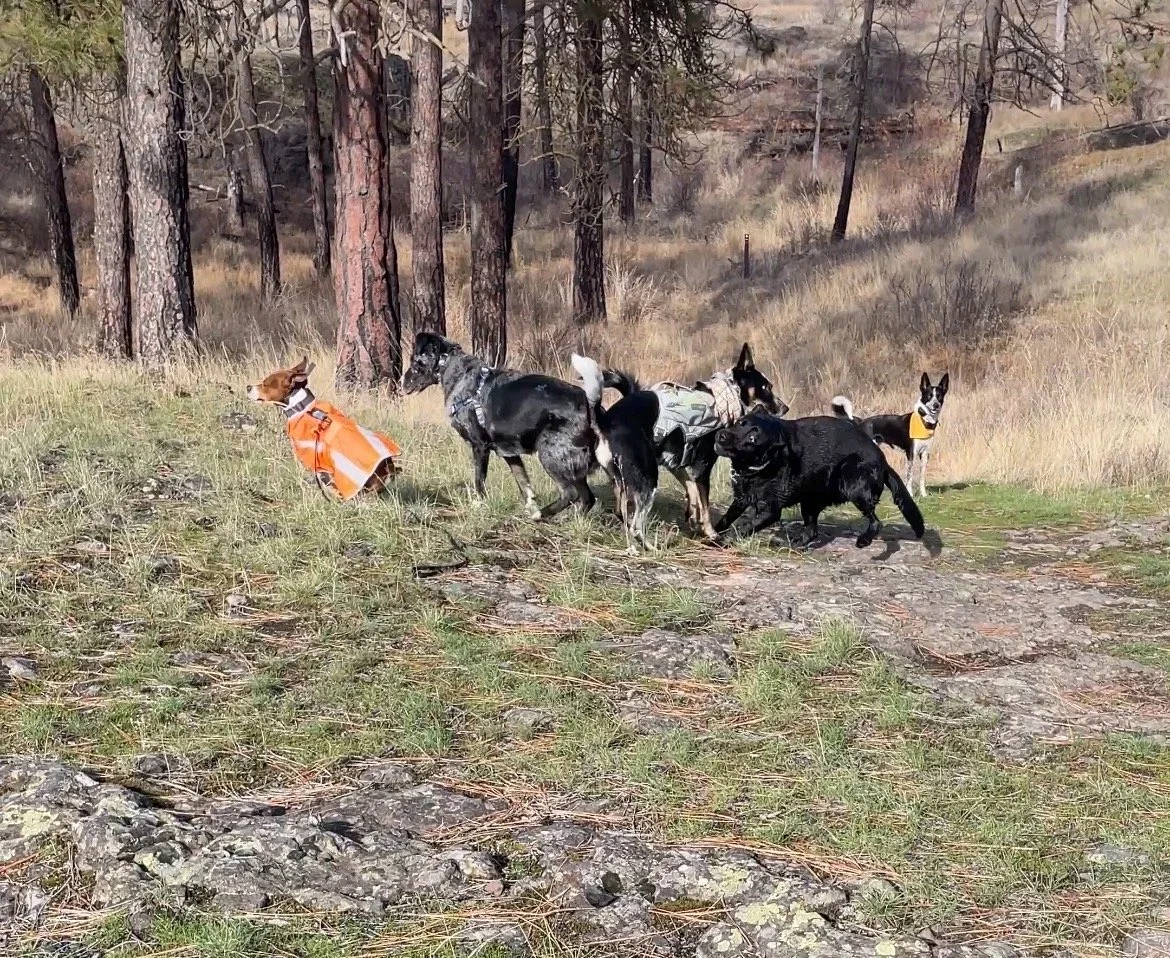
Happy off-leash dogs on a group hike, all wearing e-collars.
No dog has a perfect recall. Even if your dog comes most of the time for treats, I promise you there will come a time when something better appears - a running deer, a squirrel, a horse, another dog - and your dog will NOT come back for your treat. Too many dogs have been hit by cars because owners think they have a better recall than they really do. It’s not worth a dog dying.
For many high-drive dogs, reactive dogs, and dogs that struggle with impulse control in real-world environments, I believe e-collar training is what helps give them their life back. E-collar use is better than letting a dog suffer, letting a dog stay stuck in frustration, confusion, or even fear. It’s better than euthanizing a dog for bad behavior.
Do you want to learn how to use one?
If you’re in Spokane and looking for help, I offer Private Training, Homeschool, and In-Home Training where we can resolve your dog’s behavior problems.