
Two Quick Ways To Improve Your Dog’s Behavior
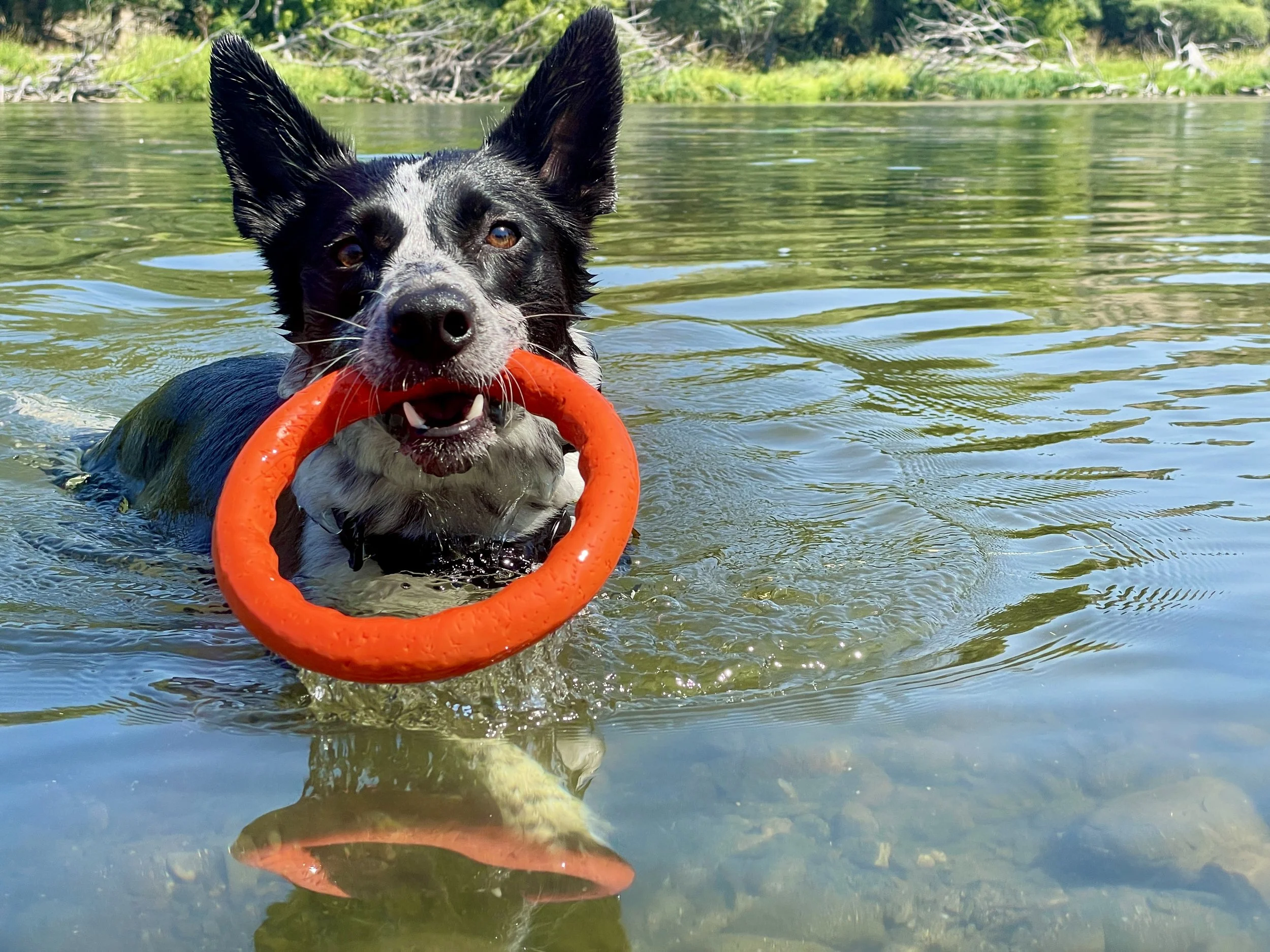
This is true fulfillment.
Like most trainers, the majority of dog owners who reach out to me are dealing with some kind of behavior problem. Their dog barks and lunges at other dogs. Their dog pulls so hard on leash it’s impossible to walk them. Their dog won’t come when called. Their dog runs the fence and barks at everyone who goes by. Some even snap at strangers—or their own owners.
I’ve seen these issues thousands of times. And there are two common threads in every single one of these dogs.
1. The dog is grossly underfulfilled.
One of the first questions I ask is: “What does your dog do for fun?”
Almost every time, I get a blank look. Sometimes people say things like:
“He plays with my other dog.”
“I have a fenced yard he can run in.”
“We go to the dog park sometimes.”
“He gets a walk around the neighborhood a few times a week.”
I hate to break it to you, but that’s not enough. That’s not fulfillment.
What I want to hear is something like:
“We go on off-leash hikes so my dog can run in nature.”
“I take him swimming at the lake.”
“I play tug because that’s his favorite thing ever.”
“I throw the ball for her every evening because she lives for fetch.”
Those are fulfilling activities. They actively involve the owner. They are mentally and physically satisfying. And 99% of the problem dogs I see don’t have any of that. They’re bored, under-stimulated, and frustrated.
And no, a lick mat or food toy isn’t fulfillment. It’s just a distraction. It’s not harmful, but it won’t help. I compare it to watching tv for people. Sure, it’s something to do, but it’s not going to ignite a passion or feeling of deep satisfaction. It’s not fulfilling on a deep and intrinsic level. It’s not what your dog was meant to do.
2. The dog has never been taught rules.

The second thing I see all the time is this crippling fear owners have of setting rules.
I’ll ask: “Have you ever made it clear to your dog that this behavior isn’t okay? That barking, lunging, or biting is off-limits?”
Most people look horrified. They think telling their dog “no” is cruel.
Meanwhile, I’ve worked with multiple owners this month whose dogs have bitten them in their own bed—yet the dog is still allowed in the bed. That’s insane. Where are the boundaries? How is the dog supposed to know the behavior isn’t okay if it’s tolerated—or worse, rewarded?
I get it. This comes from love. But it’s misplaced love. Dogs without rules are stressed and confused. They don’t understand the job description. They need leadership, not endless coddling and redirection. Not enforcing rules actually feels good in the moment for the owner, but it harms the dog because they stay stuck. It’s like giving your child everything they want and never saying no, even when the behavior is atrocious. It’s setting the child up to struggle in the real world: in school, the workplace, with friendships and relationships. It’s taking away their ability to cope with things, regulate their emotions, and behave in an appropriate way that will make life easier for them.
Start With These Two Things
If you’re struggling with your dog’s behavior, start by addressing these two things:
True canine fulfillment.
Create and enforce rules.
These two things alone may not solve everything, but they’re a big and important first step.
If You’re In Spokane…
And want help with your dog’s reactivity or behavior problem, I can help! The problems are fixable with the right training.