
Can I Train My Dog Myself?
Or do I need a trainer?
Yes. You can train your dog yourself.
The real question is whether you can train your dog well enough to be useful, well enough to solve real-world behavior problems without accidentally making things worse along the way.
For most people, the answer is no.
Almost every client I work with has already tried to DIY their dog’s training first. That usually doesn’t just delay progress, it often worsens the problem or creates additional problems that have to be fixed. In an attempt to save a few bucks, they ended up paying more and wasting years struggling with a behavior problem that I could’ve fixed in a few weeks.
Here’s why DIY dog training usually falls apart:
1. Most people are learning from unreliable sources
Dog training advice online is inconsistent at best and flat-out wrong at worst.
Owners pull information from YouTube, social media, free courses, books, all from different trainers who often contradict each other. Even when the source is decent, it’s still generalized content made for an audience of thousands of dogs—not their individual dog.
So people end up trying to follow fragmented instructions without a clear system and without any way to know whether what they’re doing is correct.
2. There is no feedback loop
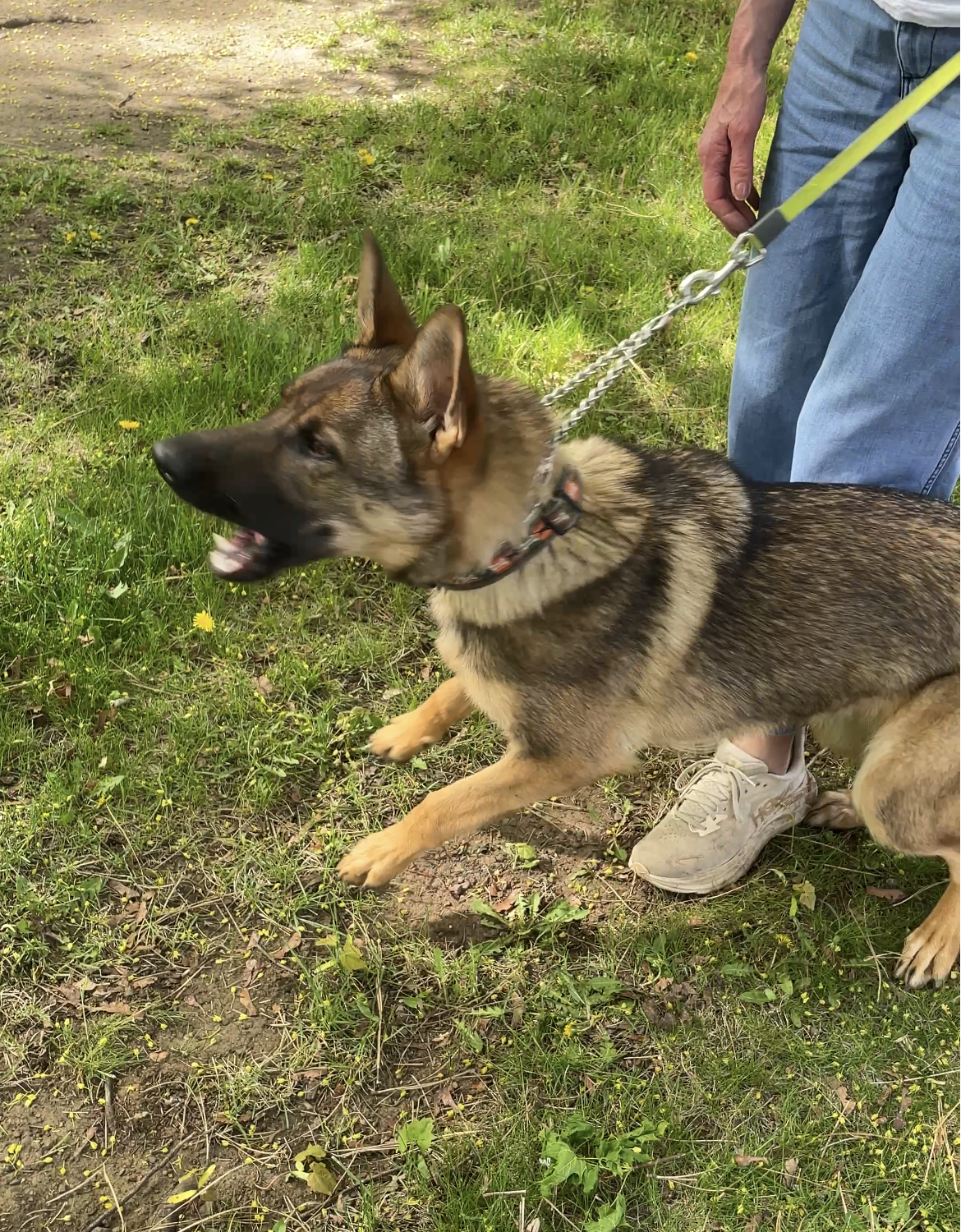
This is the biggest issue.
Dog training is not just about knowing what to do in an abstract, hypothetical sense - it’s about doing it in real life with correct timing, clarity, and consistency even with distractions and the dog having a hard time.
Most owners don’t have anyone watching them and saying:
“That’s too late.”
“You’re rewarding the wrong moment.”
“Your criteria just changed.”
“You gave the wrong command.”
“Your timing is way off.”
“You’re being really unclear to your dog by…”
“Instead of doing this, try this…”
“He’s doing that because you’re giving him mixed feedback - your voice is happy but you’re popping the leash.”
Without that feedback, people either:
assume they’re doing it correctly when they aren’t, or
assume the method doesn’t work when the real issue is execution
don't realize they’ve only done step one of many and stop way too soon
All outcomes stall progress.
3. Dogs are not interchangeable
There is no universal training plan that works the same for every dog.
Breed, age, environment, history, arousal level, motivation, temperament, and reinforcement history all change how a dog responds to training.
What works for one reactive dog may fail completely for another.
A good trainer isn’t just giving instructions—they’re reading the dog in front of them, adjusting criteria in real time, and building a plan based on that specific dog’s behavior, not an abstract, hypothetical version of a dog.
4. The underlying problem is often misunderstood
A very common mistake is assuming that most behavior issues are caused by anxiety and can be resolved with rewards.
That approach is overly simplistic, and in virtually all cases it doesn’t solve the problem.
Example:
A client came to me with a dog who barked constantly in the car and lunged and barked at other dogs on walks. They were convinced it was anxiety, so they spent years trying to “comfort” the dog with treats throughout every drive and walk.
By the time I saw the dog, he was overweight, frustrated, bored, and still barking constantly.
What was actually happening wasn’t anxiety—it was a combination of poor training, rewarding bad behavior, and lack of clear boundaries. The dog had learned that barking produced good outcomes and he was allowed to do as he pleased.
Once the picture was assessed correctly, the entire approach to training changed and they finally got results.
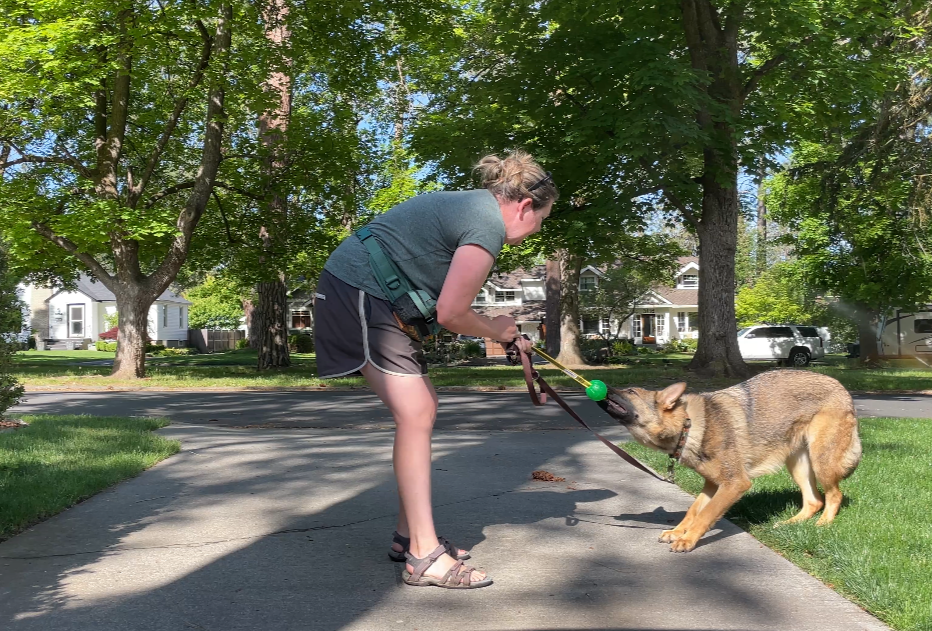
5. Owners don’t see what they’re actually doing
One of the biggest gaps in DIY training is perception.
Most owners believe they have the basics down.
I’ll ask to see a simple sit from their dog.
What I usually see is:
repeatedly calling their dog’s name before ever giving the command
constant food bribes and lures
inconsistent criteria
lack of clarity for the dog
multiple cues layered on top of each other
From the owner’s perspective, they’re doing a great job of training.
From the dog’s perspective, it’s just a lot of noise, inconsistency, and food in their face.
And when the dog finally offers something resembling a sit, it’s reinforced heavily—even if it took 20 commands.
The owner is thinking, “My dog knows sit really well!”
The reality is the dog has learned how to ignore them for 10 minutes before putting their butt down for 3 seconds, grabbing a treat, and taking off again. The training the owner thinks is so brilliant is actually pretty bad.
6. What a professional trainer actually provides
A good trainer isn’t just someone who knows more.
They provide:
objective observation
real-time feedback
a structured plan tailored to the dog in front of them
troubleshooting when things go wrong
accountability for the human side of the equation
Most importantly, they translate theory into execution. It’s not enough to just understand the concept, it needs to be implemented properly as well.
Final answer
Can you train your dog yourself?
Yes.
But for most people, without guidance, feedback, and a structured plan, the result is going to be mediocre at best.
Hiring a trainer prevents wasted time, keeps your dog from getting worse, and gets (better) results significantly faster. If you love your dog, a good trainer is not a waste of money. You may save some money training yourself, but the overall cost will be high.
If you want to actually resolve the problem, Private Training can help! It’s a more affordable way to get some one-on-one, direct help with your dog. You’ll save money by doing the work yourself, but you’ll have feedback and guidance to get you (and keep you) on the right track.